
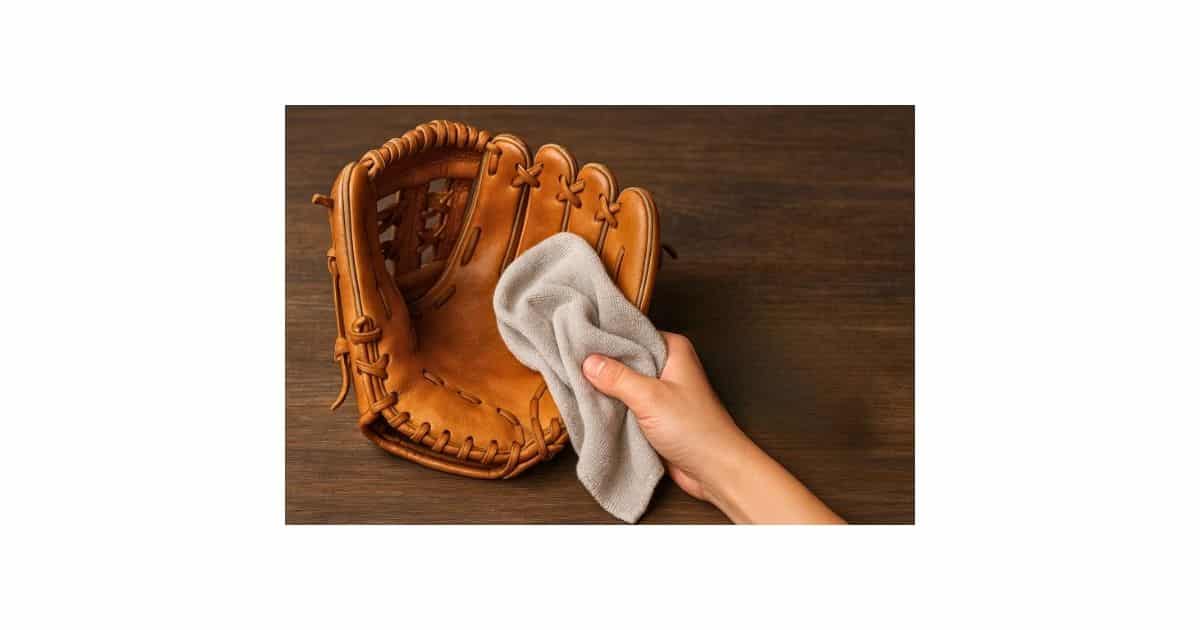
How to Clean a Baseball Glove
Cleaning a baseball glove probably isn’t at the top of anyone’s weekend plans. Most parents and players never even think about it — until the glove feels stiff, looks rough, or suddenly doesn’t close the way it used to.
But here’s the truth:
A clean glove works better, lasts longer, and feels better in your hand.
Dirt, sweat, and infield dust slowly work their way into the leather, breaking down the fibers and pulling out natural oils. That’s why a glove that never gets cleaned often feels “dead” after one season… while a well-cared-for glove can last for years.
The good news?
Cleaning a glove is simple, safe, and takes just a few minutes. And you can do most of it with supplies you already have at home.
Let’s break it down.
Disclosure: This page contains affiliate links. If you make a purchase through one of these links, I may earn a commission—at no extra cost to you.
1. Why Cleaning Your Glove Matters
A baseball glove takes a beating. Between sweat, dirt, clay, grass, and dust, all that grime settles deep into the leather — especially around the pocket, the palm, and the finger stalls.
Why It Matters
When dirt and sweat sit in the glove, they:
- pull out the oils that keep leather flexible
- stiffen the hinge
- weaken the pocket
- cause dryness and cracking
- make the glove feel heavier
A dirty glove literally fights against you. A clean one moves with you.
Pro Tip
If the glove feels heavy, sticky, or tough to close, don’t blame the break-in — it probably just needs a cleaning.
2. What You Can Use to Clean a Glove
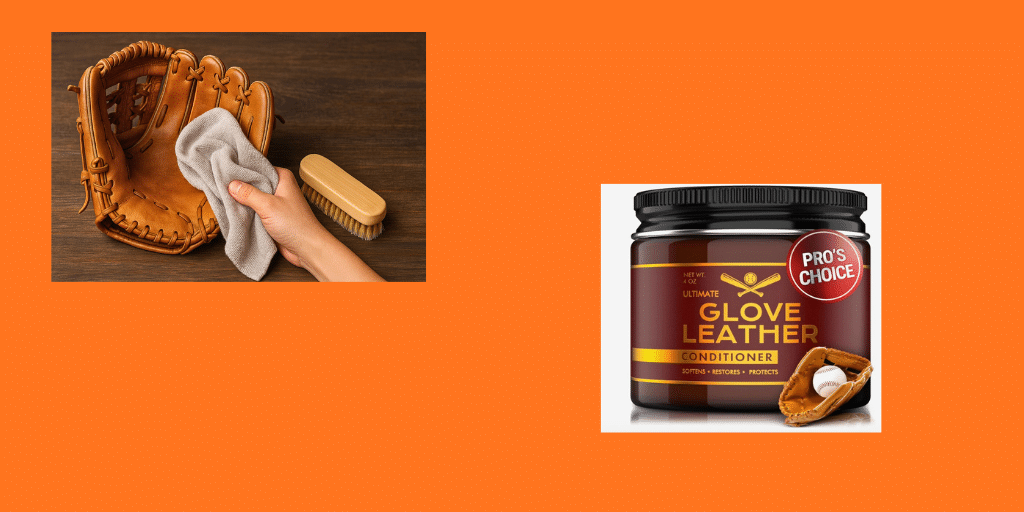
You don’t need special tools. In fact, most glove cleaning can be done with:
- a dry rag
- a slightly damp rag
- a toothbrush
- a soft cloth
These are gentle on leather and strong enough for everyday dirt.
Why It Matters
iNote: Over-cleaning can cause even more damage. Keeping it simple protects the material.
Pro Tip
If you’re unsure whether something is safe on the leather, test it on a hidden area like the wrist strap.
3. Light Cleaning With a Dry Rag
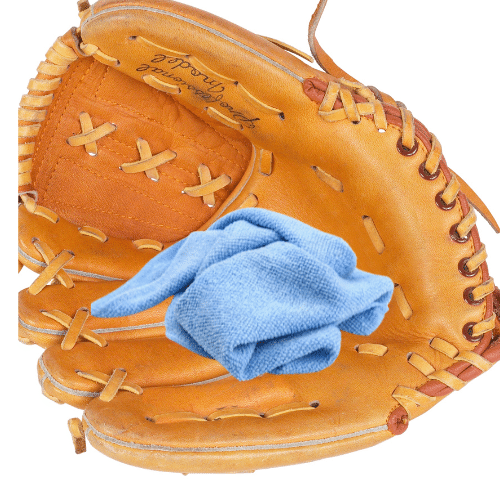
Start with the basics: wipe the glove down with a dry rag. This removes the loose dirt sitting on the surface.
Hit the usual trouble spots:
- palm
- laces
- hinges
- finger stalls
Why It Matters
This takes care of 70% of the problem. Loose dirt grinds into the leather over time — removing it early saves you headaches later.
Pro Tip
Use the corner of the rag to get inside the finger stalls. That’s where most of the sweat and dirt hide.

4. Use a Slightly Damp Rag (If Needed)
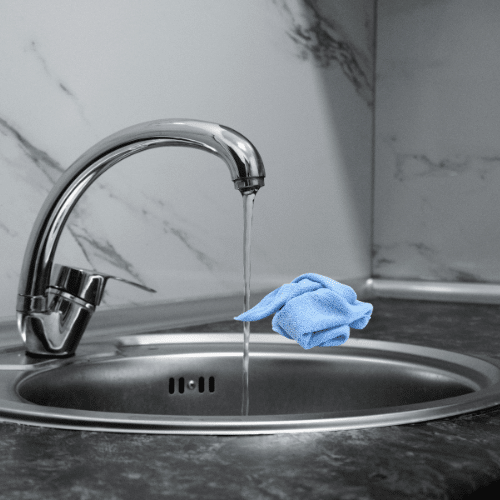
If the glove is still dirty, use a rag dampened with a small amount of water.
Think: barely wet, not dripping.
Rub gently in small circles to lift grime.
Why It Matters
A tiny bit of moisture helps loosen stubborn dirt without harming the leather.
Pro Tip
Always dampen the rag away from the glove. Never pour water directly on the leather.
5. Break Out the Toothbrush
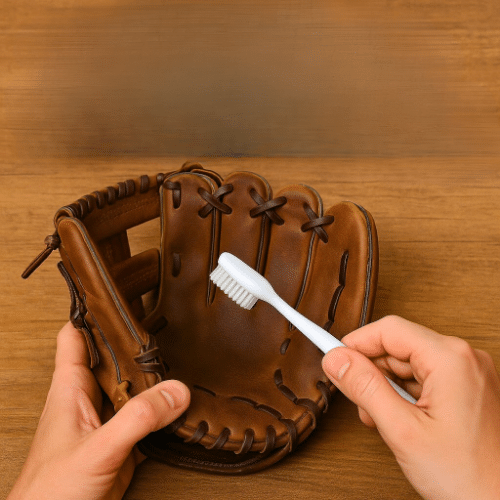
For seams, laces, stitching, and tight spots, a toothbrush works wonders. The bristles loosen dirt without scraping the leather.
Why It Matters
Laces and stitching are the first areas to wear out. Keeping them clean helps them last much longer.
Pro Tip
Gentle pressure is all you need. Let the brush do the work.
6. Deep Cleaning (Only If You Really Need It)
If the glove has years of grime, sweat stains, or dark discoloration that won’t come out with water, then a glove-specific cleaner can help.
These come in two types:
- Soap-style cleaners (Ball Player’s Balm)
- Cream/ointment-style cleaners (Sarna Baseball Cleaner)
They’re designed to lift heavy buildup without damaging the leather.
Why It Matters
Regular household soaps contain detergents that strip leather oils — not good. Baseball-specific cleaners are balanced to clean without drying out the glove.
Pro Tip
Always test the cleaner on a small hidden area first. Different leathers react differently.
7. Conditioning After Cleaning
Cleaning removes grime — but it also removes some natural oils. Conditioning restores moisture and flexibility.
There are two main types:
- paste-style conditioners — protect the surface
- light conditioners — moisturize without weighing down the glove
Most modern glove experts prefer conditioners because they evaporate cleanly and don’t sit heavy in the leather.
Why It Matters
Conditioning helps prevent:
- dryness
- cracking
- stiff hinges
- early breakdown
Pro Tip
Less is more. A pea-sized amount is usually enough for the palm and pocket.
⭐ Glove Cleaning and Conditioners
You don’t need special products to clean a baseball glove — a rag, a toothbrush, and five minutes of effort will get you most of the way there.
But if you want to make the job quicker (or your kid’s glove looks like it survived a sandstorm in Arizona), here are a few easy Amazon products that do the trick.
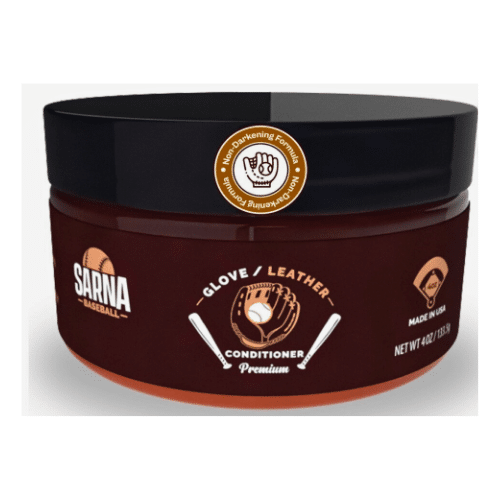
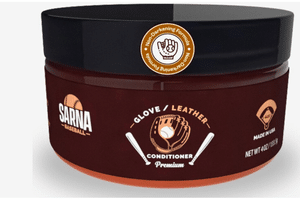
1. Sarna Baseball Glove Conditioner
If your glove feels dry or stiff after a cleaning, Sarna is a lightweight conditioner players love. It absorbs fast, keeps leather soft, and won’t leave the glove greasy.
Best for: keeping leather moisturized after a cleaningBest for: keeping leather moisturized after a cleaning
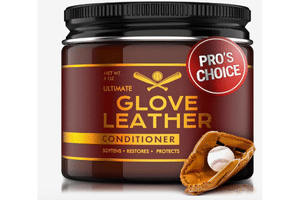
2. FORTIVO 3-in-1 Cleaner + Conditioner
For the “I just want one product” crowd, this one cleans and conditions in a single step. Great when the glove has both dirt and dryness.
Best for: simple, one-step cleaning/conditioning
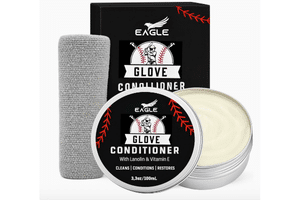
3. Eagle Leather Conditioner Cream
A gentle cream that’s great for youth gloves or mid-level leather. Super easy to apply and hard to overdo.
Best for: light conditioning without the risk of over-conditioning
4. TOFL Baseball Glove Conditioner (Budget Pick)
Affordable and effective. Ideal for parents who just want to keep the leather from drying or cracking without spending much.
Best for: basic conditioning on a budget

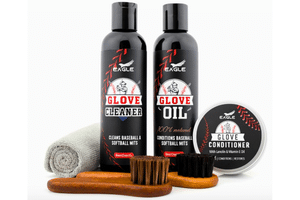
5. Baseball Glove Cleaner Kit (Brush + Cleaner)
When your rag doesn’t stand a chance, a dedicated cleaner + brush lifts dirt from seams, laces, and finger stalls. Perfect for older gloves or heavy infield use.
Best for: deep-cleaning stubborn grime
How Often Should You Clean a Glove?
It depends on how often you play and the climate you live in.
Why It Matters
Dry climates (California, Arizona, Nevada) pull moisture from leather faster.
Humid climates make gloves collect more grime.
Pro Tip
General rule:
Light clean every 4–6 weeks. Deep clean once or twice a year.
FAQs
1. Can I use regular soap to clean a glove?
No. Household soap can strip the leather’s natural oils. Stick to water, a rag, or glove-specific cleaners.
2. Can I soak a glove in water?
Absolutely not. Light moisture is fine — soaking is a good way to ruin the shape.
3. Can kids clean their own gloves?
Yes. Give them a rag and toothbrush and let them knock the dirt off. It’s a good habit builder.
4. How do I clean the inside of the glove?
Use the corner of a rag or a toothbrush to wipe out sweat and dirt. Finger stalls get gross fast.
5. Should I use oil instead of conditioner?
Most experts prefer conditioners today. Oils can weigh the glove down or clog pores.
6. Can cleaning affect the break-in?
Only in a good way — clean leather stays flexible and holds its shape better.
Conclusion
Cleaning a baseball glove might feel like an afterthought, but it makes a massive difference. A clean glove stays soft, performs better, and can last seasons longer — which means fewer “Dad, I need a new glove” conversations in June.
You don’t need special tools. You don’t need expensive products.
Just a rag, a toothbrush, a few minutes of care, and — if you want to get fancy — a conditioner or cleaner that helps keep things in top shape.
Your glove puts in the work.
Give it a little love back.


