Best Weighted Baseballs for Velocity Training
Velocity matters—but so does staying healthy. Young pitchers, travel players, and weekend warriors alike face the challenge of building arm strength without compromising mechanics or risking injury.
Weighted baseballs can deliver real performance gains when used smartly.
Below, you’ll find top picks that solve different needs—whether you’re warming up, speeding up, or loading the arm—with clear features, real‑world insight, and honest pros and cons. Let’s get into it.
What Are Weighted Baseballs?
Weighted baseballs look like regulation balls but tip the scales heavier (and sometimes lighter) than the standard 5 ounces. Common weights range from 4 oz (underload) to 12 oz (overload) — with training sets often including multiple sizes for progressive work.
They’re designed to challenge your throwing mechanics by increasing resistance or forcing speed adjustments. The goal: teach your body to move more efficiently so a regulation baseball feels like nothing.
Benefits of Weighted Baseball Training
Velocity Boost
Studies and anecdotal evidence show velocity jumps of 2–4 mph after structured weighted ball programs.
Arm Strength & Endurance
The extra resistance forces your muscles, tendons, and ligaments to adapt — making your arm more resilient.
Improved Mechanics
Using both heavier and lighter balls can help refine your throwing motion, promoting better arm path and timing.
Better Feel for Release
Switching between weights challenges your proprioception (your body’s awareness of its own movement), making the regulation ball feel effortless.
Disclosure: This page contains affiliate links. If you make a purchase through one of these links, I may earn a commission—at no extra cost to you. As an Amazon Associate, I earn from qualifying purchases.
5 Best Weighted Baseballs for Velocity Training
1. Driveline Real Leather Weighted Pitching Balls
Serious velocity gains with a pro-level feel and structure.
If you want the same tools used in MLB and college programs, this is the set.
Driveline’s leather-weighted baseballs are built for pitchers and position players committed to structured velocity work—not for backyard tossing without a plan.
The genuine leather cover and raised seams make them feel like the baseballs you’d use in a high-stakes game, but with progressive weights (3 oz to 11 oz) to load and unload the arm safely.
And the included 16-week velocity program means you don’t have to guess your way through training.
🔍 Key Features:
- Six leather-covered, official-size baseballs in progressive weights (3 oz, 6 oz, 7 oz, 9 oz, 11 oz, plus one underload)
- Authentic raised seams for realistic grip and release
- Includes a Driveline 16-week velocity program (recommended for ages 14+)
- Backed by Driveline’s research on safe, effective weighted-ball use
🗣 What They’re Saying:
Parents, coaches, and players consistently call these the “industry standard” for velocity training.
The leather and seams make every throw feel game-ready, while the progression of weights supports both overload and underload work.
Coaches like that the program is clear, research-based, and emphasizes proper mechanics and rest.
Players say they’ve seen measurable velocity gains and better arm health when sticking to the plan.
The main cautions? They’re not cheap, and they’re not for unsupervised youth—this is high-performance equipment meant to be used with intent.
👍 Pros:
- Extremely durable and holds up to intense training
- Backed by research and trusted at all levels—from travel to MLB
- Comes with a proven, structured 16-week program
😞 Cons:
- Pricier than most weighted ball sets
- Not recommended for unsupervised players under 14
✅ Bottom Line:
If you’re ready to commit to a real velocity program and want the same quality trusted by pros, Driveline’s leather-weighted baseballs are the benchmark.
They cost more, but the durability, feel, and included program make them a long-term investment in performance—and arm health.

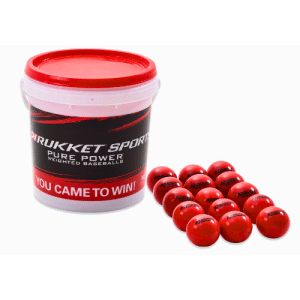
2. Rukket PUREPOWER® Weighted Baseballs
Heavy-duty strength building and focused batting practice.
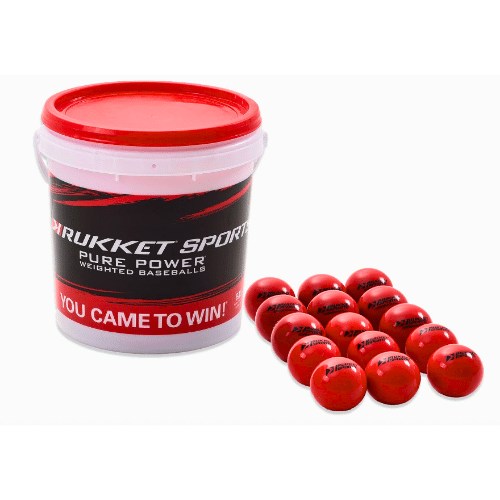
The Rukket PUREPOWER balls aren’t just weighted—they’re built to take a beating.
Each ball weighs about a pound, with a thick rubber shell and a slightly squishy feel that still matches the size of a game baseball.
They’re great for hitters and pitchers looking to add resistance work into warm-ups or training blocks.
And because mishits don’t send the ball flying, they’re perfect for confined spaces or team sessions where safety is key.
🔍 Key Features:
- 15 one-pound balls with thick rubber shell and weighted filling
- Close to game-ball size, slightly softer feel for controlled contact
- Suitable for hitting, throwing drills, and pregame warm-ups
- Includes bucket for storage and easy transport
🗣 What They’re Saying:
Coaches say these are a pregame lifesaver—especially when cage time is tight—because they let players get quality swings in a short space.
The weight forces hitters to make square contact to get distance, improving swing path and focus.
Parents and players like the durability; the balls hold up through season after season of team use.
Safety is a recurring note—these are heavy, so gloves, protective screens, and good spacing are musts.
Most agree they work best for warm-ups, plyometric throwing drills, and targeted hitting practice, not for endless games of catch.
👍 Pros:
- Extremely durable and can handle team-level abuse
- Limited flight on mishits makes them safer in small spaces
- Versatile for hitting, throwing drills, and warm-ups
😞 Cons:
- Too heavy for casual catch or unsupervised younger players
- Requires protective gear and coaching oversight
✅ Bottom Line:
A well-built, team-friendly tool that adds resistance training to hitting and throwing sessions.
Perfect for warm-ups, focused batting practice, and arm-strength drills—just make sure players know how to use them safely.
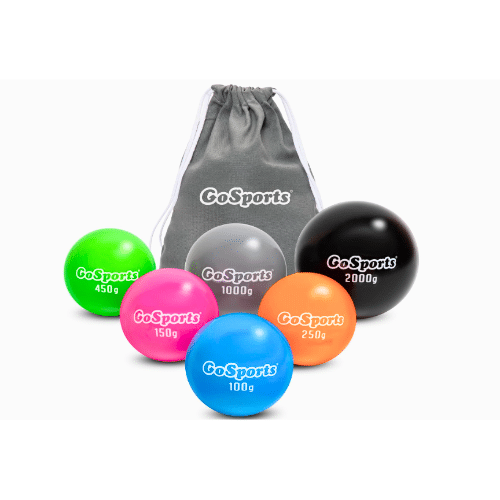
3. GoSports Plyometric Weighted Balls
Best for: Affordable, all-purpose training for both hitting and throwing.
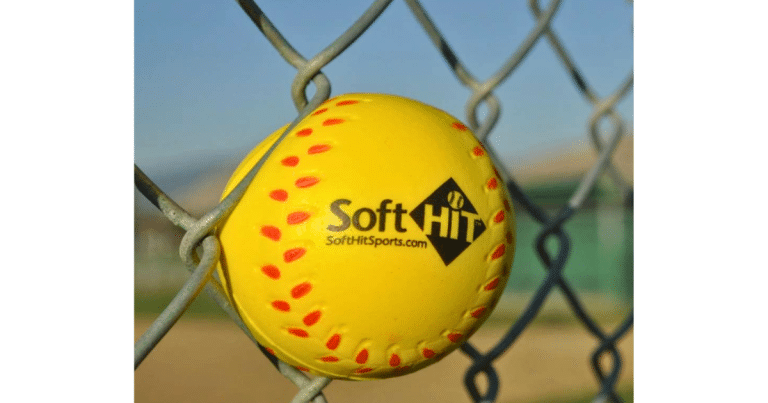
If you want a versatile training set that works for players from Little League to adult rec ball, GoSports’ plyometric weighted balls are a budget-friendly workhorse.
These rubber-coated balls can handle indoor and outdoor use, making them just as at home in a batting cage as on a gym floor.
They’re firm enough to give instant feedback on swing quality—square it up and you’ll feel it—but soft enough that you’re not risking floor damage or unsafe ricochets.
🔍 Key Features:
- Six weighted balls with durable rubber coating
- Safe for indoor or outdoor training
- Usable for both hitting and throwing drills
- Air pressure adjustable for preferred firmness
🗣 What They’re Saying:
Coaches like how these balls help build swing strength, improve throwing mechanics, and boost arm speed without feeling overly punishing for younger players.
Parents say they’re a solid starter option for weighted ball training, especially for kids—heavy enough to activate muscles and encourage good form, but not so heavy that they promote bad habits.
The rubber coating earns praise for durability and for protecting floors during indoor work.
Some note that balls can arrive overly firm or oddly shaped, but a quick air adjustment makes them ready for action.
On the value side, players and coaches alike see them as a cost-effective alternative to higher-priced sets like Driveline.
👍 Pros:
- Versatile for hitting, throwing, and plyometric drills
- Durable rubber coating protects floors and extends ball life
- Budget-friendly compared to premium weighted balls
😞 Cons:
- May arrive overly firm or misshapen (fixable with air adjustment)
- No included structured program like some higher-end sets
✅ Bottom Line:
A durable, affordable way to bring weighted ball training into both hitting and throwing work.
Great for youth programs, indoor training, or anyone who wants one set of balls that can handle almost any drill you throw at it.hted balls.
4. SKLZ Weighted Training Baseballs
Affordable, progressive arm-strength training for youth and intermediate players.
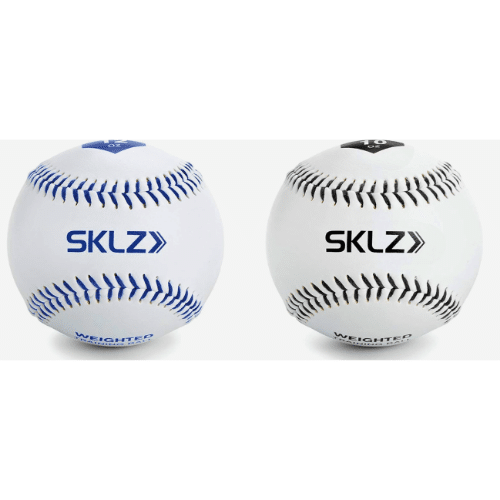
SKLZ’s weighted baseballs come in a no-fuss 2-pack—one at 10 oz., the other at 12 oz.—giving players an easy way to step up the resistance without overcomplicating the process.
Both balls are official size, with real leather covers and raised seams, so they feel just like the ball you’d throw in a game.
They’re built for repeated training use, but like all weighted balls, they reward smart, controlled sessions over endless high-volume throwing.
🔍 Key Features:
- 2-pack with 10 oz. and 12 oz. official-size baseballs
- Real leather cover with raised seams for authentic grip
- Designed for progressive overload arm training
- Durable enough for frequent practice use
🗣 What They’re Saying:
Coaches and parents like the built-in progression—start with the 10 oz. to reinforce mechanics, then work up to the 12 oz. to build strength and velocity.
Players, especially those moving up to live pitching, say consistent use has helped them throw harder and with more confidence.
The feel gets high marks—these are not slick, synthetic-feel balls—and durability is solid for the price point.
That said, most experienced coaches recommend keeping them in warmups, long toss, and short throwing drills rather than high-intensity, game-like pitching to reduce injury risk.
The value makes them a favorite among beginners and intermediate athletes who want a simple, reliable entry point into weighted ball training.
👍 Pros:
- Two weights in one set make progression simple
- Leather and seams mimic real game balls
- Solid durability for the price
😞 Cons:
- Limited weight range—no underload or heavier overload options
- Not designed for advanced velocity programs
✅ Bottom Line:
A smart, budget-friendly pick for building arm strength and introducing progressive overload without investing in a full set.
Great for warmups and strength drills, especially for players still developing their mechanics.
5. Rawlings Hand-Stitched Leather Weighted Ball (9 oz)
Best for: Realistic-feel training for arm strength and velocity development.
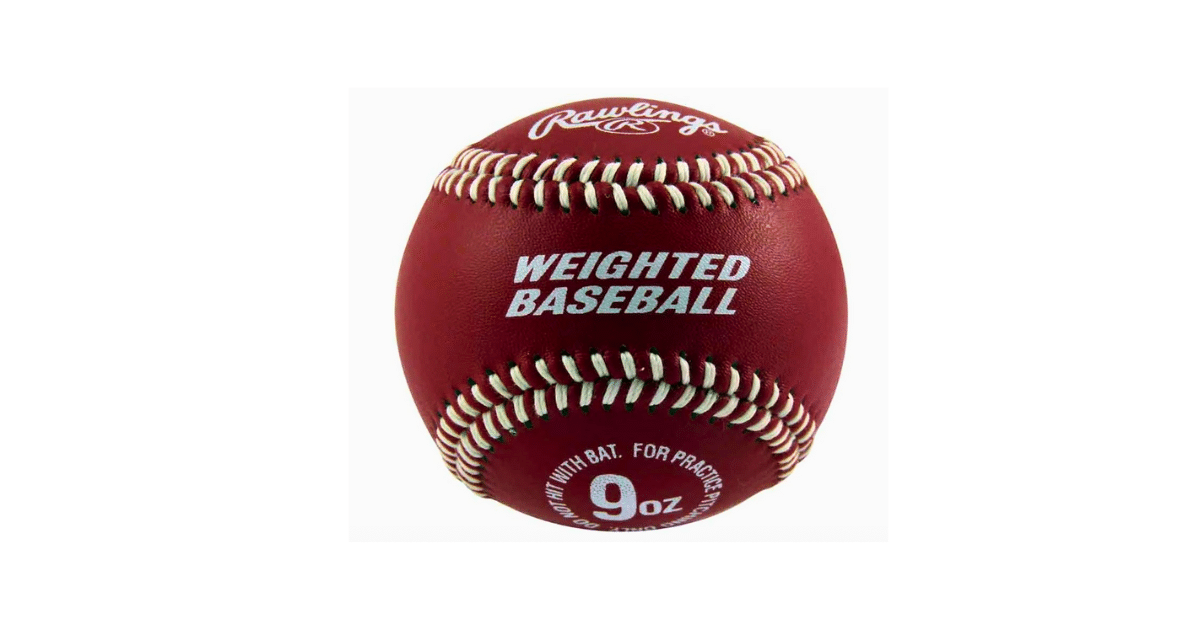
If you want a weighted baseball that feels just like the one you’ll use in a game—but with a little extra heft—the Rawlings 9 oz hand-stitched ball is a classic choice.
The extra weight challenges your arm without overloading it, making it a solid fit for players working on strength and velocity in a controlled training program. It even comes with a training guide, so you know exactly how to use it without guessing or risking bad habits.
🔍 Key Features:
- 9 oz official-size baseball with hand-stitched leather cover
- Realistic game-ball feel for seamless skill transfer
- Includes a training guide with drills and safety tips
- Designed for throwing and pitching drills only (not for hitting)
🗣 What They’re Saying:
Coaches like the authentic leather and seam feel, saying it helps keep mechanics consistent during training.
Parents appreciate that it’s safe for a wide range of ages when used properly, making it a good step-up tool for youth players moving into more competitive play.
Users report measurable gains in throwing speed and arm endurance after consistent use, with the added benefit of reducing shoulder and elbow strain when mechanics and volume are managed well.
The fact that it’s intended solely for training—no risk of ruining a game ball—gets nods from both players and traditional coaches.
👍 Pros:
- Hand-stitched leather for authentic grip and durability
- Well-balanced weight for progressive arm-strength training
- Includes clear training guide for safe, effective use
😞 Cons:
- Single weight option—no progression built into the product
- Still requires a structured program to avoid overuse
✅ Bottom Line:
A straightforward, high-quality weighted baseball that blends durability with a true game-ball feel.
Perfect for players who want to build velocity and endurance while keeping mechanics sharp

FAQs
1. Are weighted baseballs safe for younger players?
Yes — as long as you start with lighter balls, follow a gradual progression, and make mechanics the priority.
2. How often should they be used?
One to two sessions per week is plenty, with rest days in between to give the arm time to recover.
3. Should I jump straight to the heavy ones?
Nope. Build speed and groove your mechanics first with lighter weights, then work up.
4. Leather or synthetic — which is better?
Leather feels like a game ball and is great for realistic training. Synthetic holds up better for outdoor and wet-weather work.
5. Do I need an entire weighted ball set?
Not necessarily. Even one or two weights can be effective if you use them consistently and with a plan.
6. How do I take care of leather weighted balls?
Wipe them clean after use, keep them dry, and condition the leather occasionally to extend their life.
Final Thoughts
Weighted baseballs aren’t magic. They’re a tool — one that can help you throw harder, build arm strength, and sharpen mechanics if used correctly.
If you’re serious about adding velocity in 2025, start light, follow a program, and pick the right gear.
⚾ Pro Tip: Combine weighted ball work with resistance bands, mobility training, and regular bullpen sessions for the biggest payoff.
Follow a smart progression, and give your velocity its best chance to show up when it counts.