
The Ultimate Guide to Solo Baseball Drills for Aspiring All-Stars In 2025
⚾️ The Backyard Breakthrough
Ever watched your kid toss a baseball against a garage wall for hours, pretending they’re turning two at Fenway?
Maybe you were that kid once, I definitely was!
The truth is, some of the greatest ballplayers weren’t made in stadiums—they were built in driveways, dusty parks, and quiet mornings at the local field.
Practicing solo isn’t just a fallback when teammates are busy. It’s a secret weapon.
Whether your child dreams of All-Star weekends or simply wants to stop striking out, solo baseball drills are where consistency, confidence, and raw skill are forged.
Perfect for aspiring All-Stars training at home. Just grab your gear and go.
💡 The Solo Practice Challenge
Here’s the hard truth: most youth players don’t get enough reps.
Even with a great coach and supportive parents, team practices often favor strategy over skill-building.
That leaves kids with gaps in their fundamentals—especially when it comes to mechanics, timing, and muscle memory.
And let’s be honest: solo practice can feel… boring.
Without structure or purpose, it’s easy to go through the motions or give up too soon.
But with a few targeted drills—and the right mindset—players can turn solo time into serious development time.
“Every strike brings me closer to the next home run.” – Babe Ruth
Disclosure: This page contains affiliate links. If you make a purchase through one of these links, I may earn a commission—at no extra cost to you. As an Amazon Associate, I earn from qualifying purchases.

🛠️ Step-by-Step Solo Drill Solutions
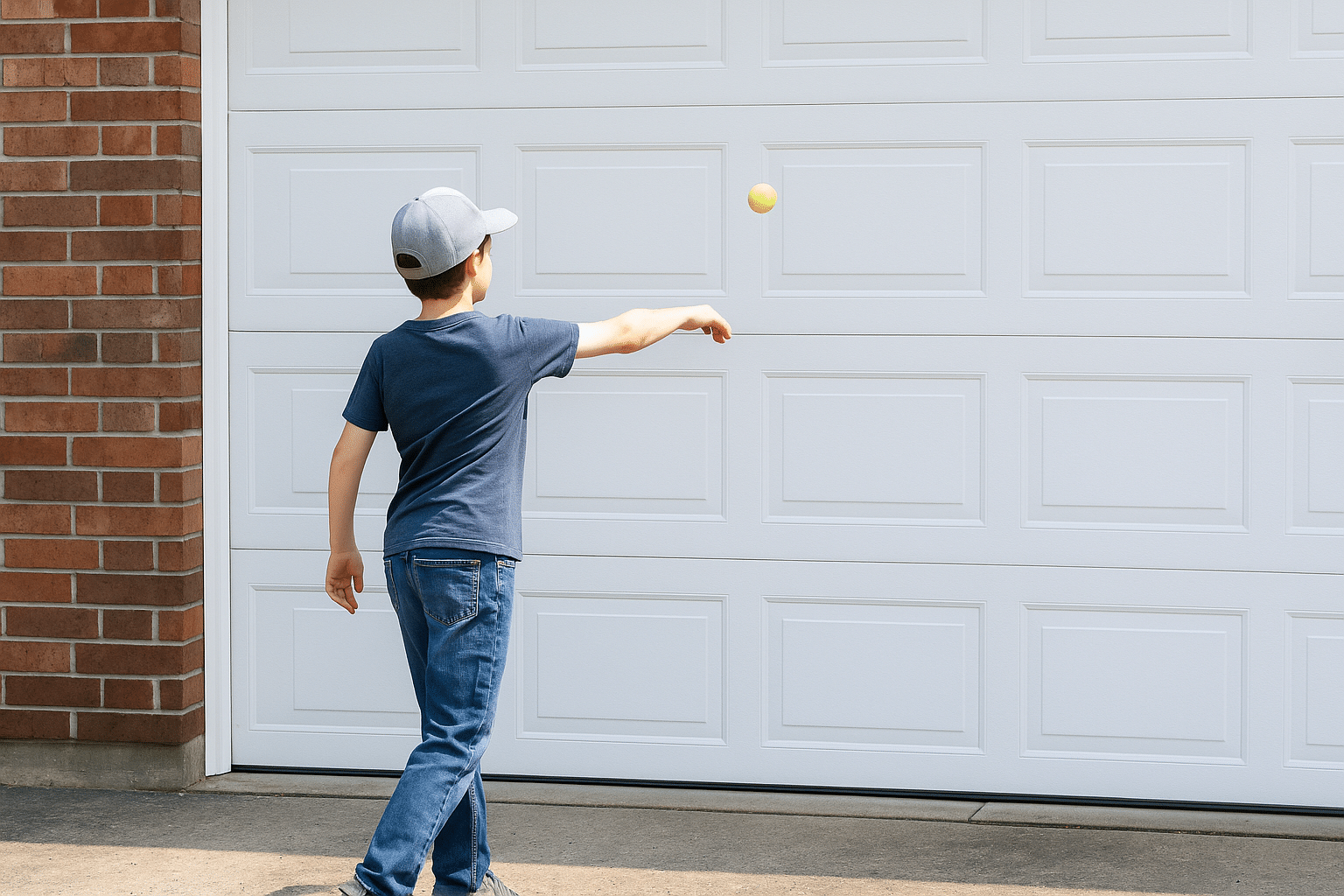
1. 🎯 The Wall Ball Challenge
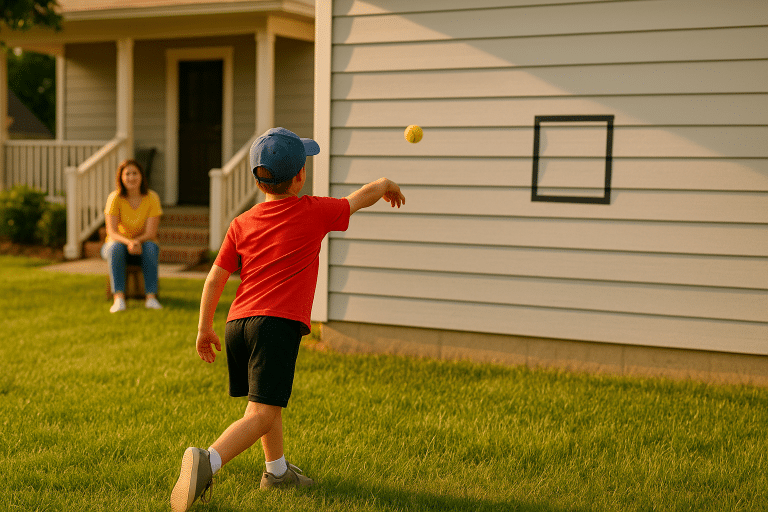
What You Need: A wall (garage, gym, etc.) and a tennis ball or soft baseball
How to Do It:
- Stand 10–15 feet away. Throw the ball at the wall and catch it cleanly on the rebound.
- Practice one-hand catches, glove work, and transferring to the throwing hand.
- Switch distances and angles. Add footwork to simulate game scenarios.
Why It Works: Improves reflexes, throwing accuracy, and hand-eye coordination—without needing a partner.
Coaching Angle: Challenge players to complete 10 clean transfers in a row before they can quit.
Make It Fun:
- Time yourself—how many clean catches in 60 seconds?
• • Add challenges: no drops, opposite hand only, or “off the bounce” catches.

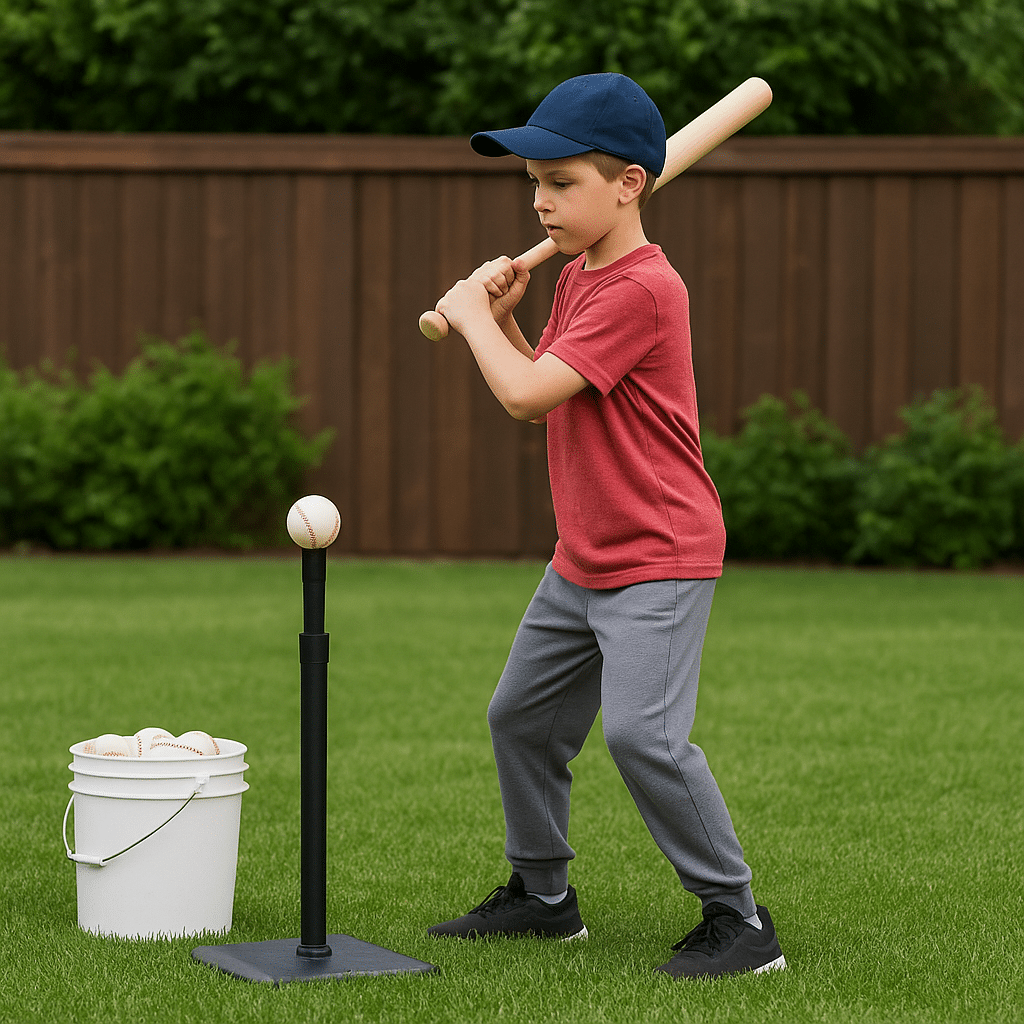
2. 🧢 The Bucket Batting Tee Routine
What You Need: Batting tee, 10–15 balls, a bat, and a bucket
How to Do It:
- Load the tee at waist level and focus on hitting line drives to a specific target (net, fence, cone).
- Switch tee height and pitch zones to simulate inside/outside/middle pitches.
- Use a consistent stance and reset before every swing.
Why It Works: Builds barrel control, consistent mechanics, and better muscle memory.
Coaching Angle: Have players “call their shot” before each swing—inside, gap, or up the middle.
Make It Fun:
- Create a spray chart target with zones worth points.
• • Use chalk to mark swing path cues on the tee base.
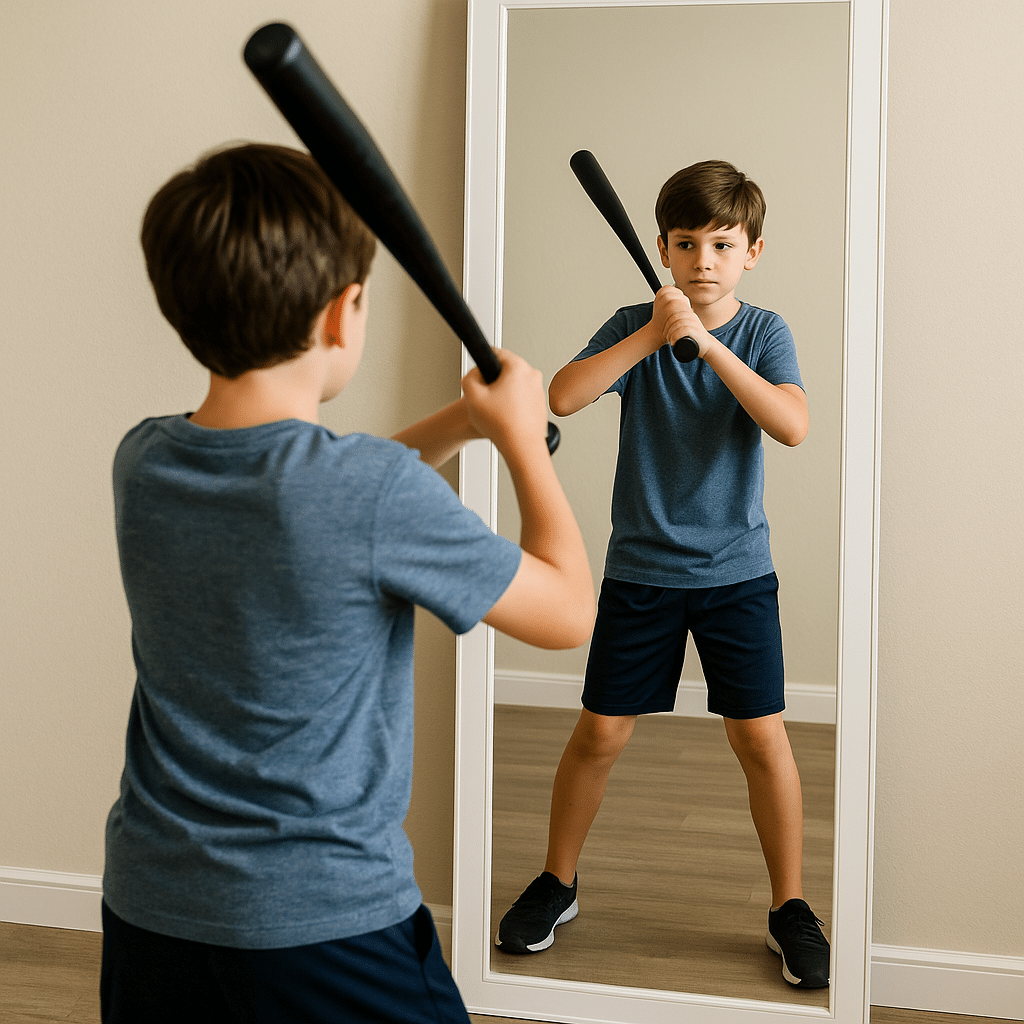
3. 🧠 Mirror Moves
Hitting or Pitching Mechanics
What You Need: Full-length mirror or phone with camera stand
How to Do It:
- Slowly walk through your swing or pitching motion in front of the mirror.
- Focus on posture, head position, weight transfer, and follow-through.
- Watch a favorite MLB player and try to mimic their form in slow-mo.
Why It Works: Builds self-awareness and body control, two keys to long-term improvement.
Coaching Angle: Help kids identify 1–2 “checkpoints” to watch—e.g., elbow height or back foot position.
Make It Fun:
- Let the player create their own “perfect form” video and compare weekly.
• • Do a side-by-side with a pro for inspiration.
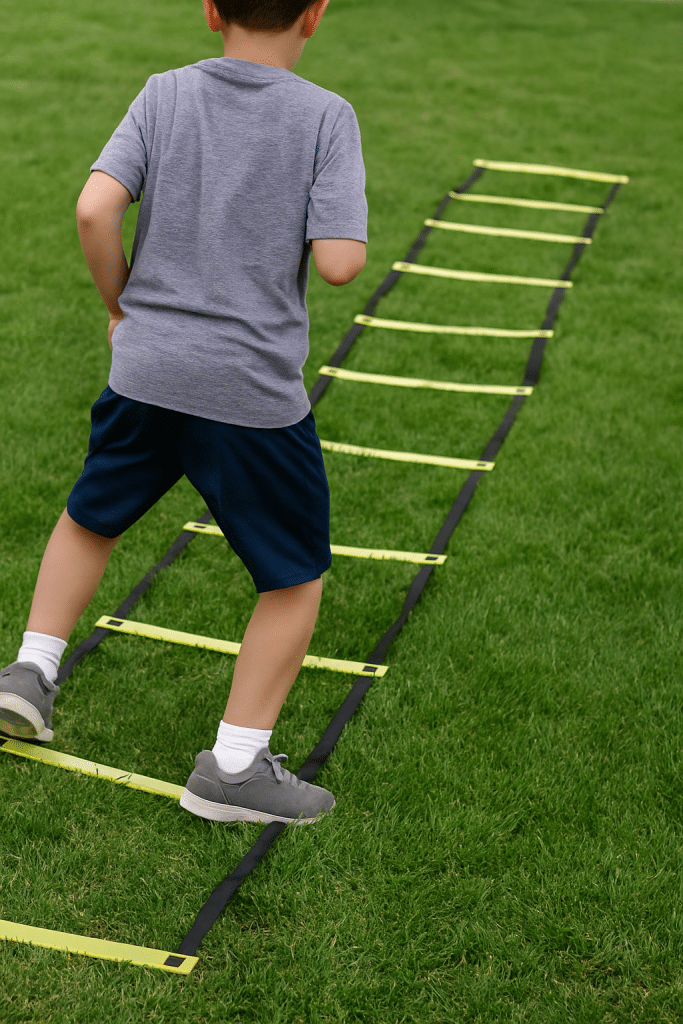
4. 💨 Agility Ladder Circuit
Speed & Footwork
What You Need: Agility ladder, chalk lines, or tape on pavement
How to Do It:
- Perform 3–4 classic ladder drills: high knees, lateral shuffles, icky shuffle, in-out hops.
- Add a glove and simulate fielding positions after each movement.
- Go fast, but stay controlled.
Why It Works: Boosts agility, first-step quickness, and defensive footwork.
Coaching Angle: Turn it into a 3-round speed circuit with water breaks in between.
Make It Fun:
- Create “obstacle courses” using cones or bases.
• • Time each round and aim to beat your best.
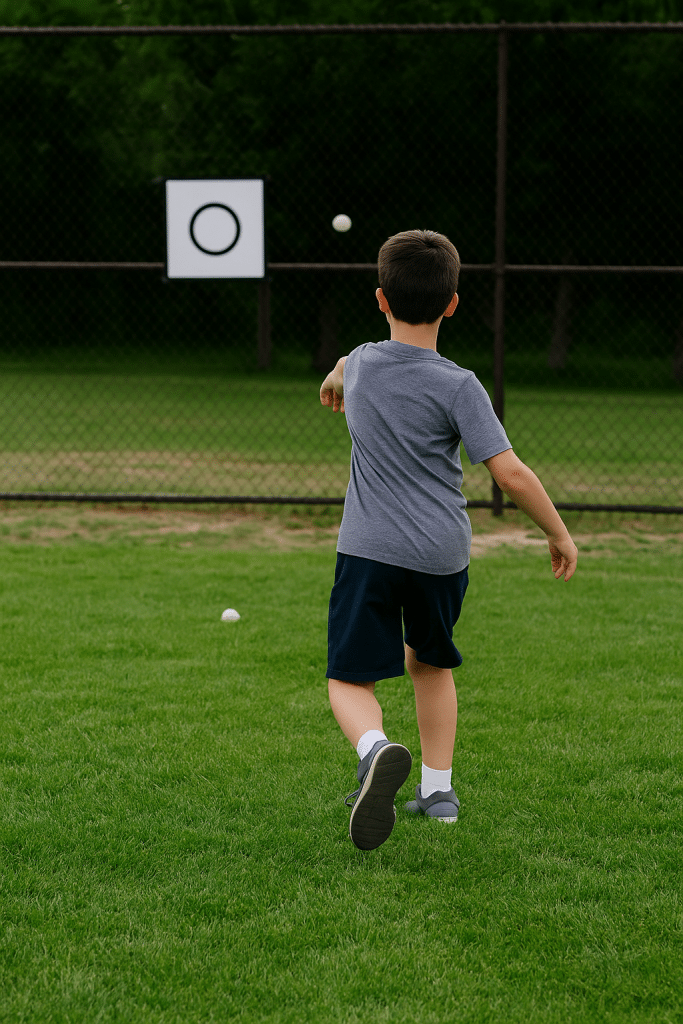
5. 🥏 The Target Toss
Pitching Precision or Fielding Focus
What You Need: Strike zone target (or chalk box), 5–10 balls
How to Do It (Pitching):
- Set up a strike zone on a net, wall, or fence.
- From 45–60 feet (age-appropriate), aim for corners or specific quadrants.
- Keep count of strikes vs. misses.
How to Do It (Fielding):
- Use underhand or sidearm tosses to hit small targets at 20–30 feet.
- Focus on quick hands and accurate release.
Why It Works: Improves control, accuracy, and decision-making under pressure.
Coaching Angle: Create a “strike chart” for tracking progress—make it visual and goal-oriented.
Make It Fun:
- Use plastic cups, water bottles, or cones as knock-down targets.
• • Give players points for each “hit” and challenge them to beat yesterday’s score.
• • Bonus points for knocking over a water bottle with a perfect throw!
Frequently Asked Questions
How long should a solo session last?
30–45 minutes, max. Keep it focused and fun to avoid burnout.
How do I know if my child is improving with these drills?
Track simple metrics: more clean catches, better contact on the tee, quicker ladder times.
Video tape them once a week for a side-by-side comparison—it’s a great motivator.
What’s the best age to start solo drills?
As early as 6–7 years old—with adult supervision. Just keep it light and playful.
Do these drills work for all skill levels?
100%. Beginners build fundamentals, while more advanced players refine mechanics and mental focus. You can always scale intensity, targets, or speed to match ability.
Can these drills help prevent injuries?
Yes—especially when focused on proper form and controlled reps.
Mirror work and agility drills improve mechanics and body awareness, both key to staying healthy.
What if my kid gets bored practicing alone?
Try mixing in mini-games or challenges—like time trials, point systems, or video replays.
Keep sessions short and focused (30–45 minutes tops) to maintain energy.
🏁 Closing Thoughts: The All-Star Mindset
Solo drills build more than just skills—they build habits.
They create athletes who work when no one’s watching, and players who show up already dialed in.
So the next time your kid grabs a glove and says, “I’m heading outside to practice,” you’ll know: this is where greatness starts.
Want more tips, gear picks, and baseball wisdom with a twist?
👉 Subscribe to High N Tight — our weekly newsletter breaking down the sometimes crazy world of baseball, coaching hacks, and the tech transforming the game.


Extremely useful! I love how this site breaks down complex topics.
Thank you