
Why Kids Swing Late — And How to Fix It (Fast)
Help your young hitter stay on time when the pitching gets faster
Your kid steps in.
Pitcher winds up.
Fastball coming.
They know it’s coming… and they’re still late.
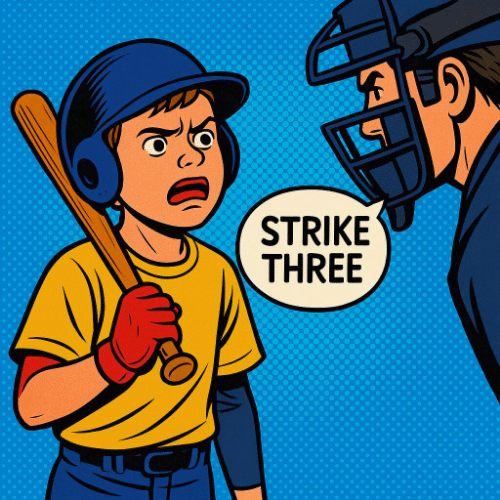
Strike three.
Head down on the walk back.
Frustration everywhere — and nobody has a clear answer.
Here’s the truth most parents never hear:
Swinging late isn’t about trying harder.
It’s a timing problem — and timing can be taught.
And when you fix the timing?
- Confidence returns
- Hard contact shows up
- The “automatic strikeout” label disappears
Let’s break this down so you know exactly what’s causing late swings — and how to correct it starting tonight.

Why Kids Swing Late — And How to Fix It (Fast)
1. How Timing Should Work (In 2 Seconds)
Hitting starts before the ball leaves the pitcher’s hand.
Like a sprinter leaning forward before the gun, the hitter must begin their move early, not during the pitch.
If the brain starts late,
the body starts late,
the swing finishes late.
Every single time.
Timing is preparation — not reaction.

2. The Real Reasons Kids Swing Late
Most late swings come from one (or more) of these four causes:
1️⃣ They Start Getting Ready Too Late
Pitcher moves…
Hitter stays frozen.
Then the panic move kicks in.
When kids rush the start, they rush the entire swing.
2️⃣ They Don’t Recognize the Pitch Early
If the eyes are late, the swing is late — even with perfect mechanics.
Kids who struggle with fast pitching usually struggle with visual timing, not swing speed
3️⃣ They’ve Never Practiced Game Speed
Beautiful swings in the cage.
Late swings in the game.
Why?
Tee-only practice builds mechanics — not timing.
Most hitters never train in a way that prepares them for realistic speed.
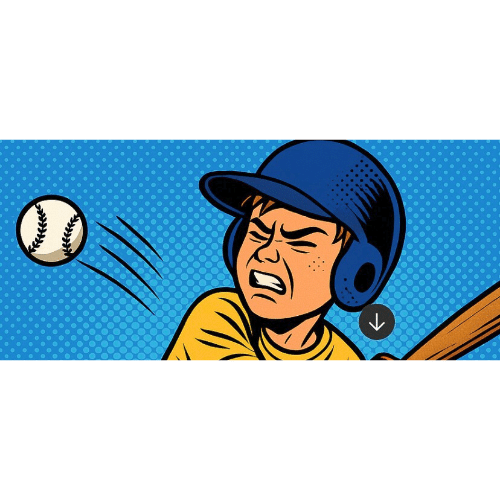
4️⃣ They’re Afraid of the Ball
A flinch steals precious milliseconds.
If a kid is bracing for contact out of fear, timing breaks down before the swing even starts.
This is the hidden reason behind many late swings.

3. Quick Bleachers Test: Is Your Kid Actually Late?
Take a short video of their next at-bat (or practice swing).
Ask yourself:
Do they start their swing when the pitcher starts the motion — or when the ball is already on the way?
If they start after release?
The swing is already late.
Diagnosis complete.
4. How to Fix Late Swings — Starting Tonight
These three fixes give kids a timing system they can use in real games.
🔥 Cue: “When the pitcher moves — you move.”
Simple.
Repeatable.
Game-changing.
This cue teaches kids to start early — not react late.
🔥 Drill #1: Pitcher Shadow Timing
No bat needed.
How it works:
- Stand in the box
- Point to the pitcher’s lower body
- As the pitcher moves, the hitter takes a small stride + hand load
This syncs the hitter’s internal clock to the pitcher’s rhythm.
🔥 Drill #2: Catch-Release Front Toss
Tosser says:
“Ready…” (pause) “Go!”
The hitter begins their swing on “Ready,” not “Go.”
This drill teaches anticipation, not reaction — crucial for beating faster pitching.
🔥 Drill #3: Reaction Lights
Call out:
- Green = swing
- Yellow = hold
- Red = stay relaxed, no flinch
This builds:
- Decision speed
- Visual timing
- Confidence
Especially for kids afraid of the ball.
5. Want Faster Results Than a Private Lesson?
Late timing won’t fix itself with random drills.
Kids need a real timing system — one they can feel and repeat.
That’s exactly what Line Drive Hitter 2.0 teaches:
- How to start early without feeling rushed
- How to see the ball sooner
- How to build timing that holds up against real pitching
- Simple parent-run drills that actually work
👉 Fix late swings with Line Drive Hitter 2.0
http://www.truthaboutexplosiverotationalpower.com/a/10558/YN2hH2oT
This is the fastest path to more contact, harder contact, and a kid who steps in the box feeling in control.

FAQs
Does swinging late mean my kid’s mechanics are broken?
Not usually. Timing problems often look like mechanical problems.
Will tee work fix late timing?
No. Tee drills help mechanics, not decision speed or pitch recognition.
Is fear really a major cause?
Yes. A protective flinch delays everything.
What age can learn timing?
Kids as young as 7 can master basic timing with one cue:
“When the pitcher moves — you move.”
Bottom Line
Late swings steal:
- Confidence
- Contact
- Playing time
- Joy
Fix the timing…
and you give your hitter the whole game back.
👉 Get Line Drive Hitter 2.0
http://www.truthaboutexplosiverotationalpower.com/a/10558/YN2hH2oT
Hard contact starts with early preparation — and your hitter can learn that today.