

🧢 Coaching Kids Baseball Defense: 5 Field-Tested Tips That Actually Work
A ground ball rolls toward shortstop. The glove’s there… but the ball slips right under it. Again.
Sound familiar?
Welcome to youth baseball defense—where dropped throws, and frozen feet are all just part of the ride.
But hey—don’t panic.
Teaching defense isn’t about perfection.
It’s about progress.
And if you’re a coach or parent trying to help kids field better (without losing your voice or your sanity), you’re in the right place.
🚧 Why Is Youth Defense So Darn Hard?
Defense is reactive. It demands fast thinking and faster feet.
But for kids still learning where to stand, where to throw, and how to move their body the right way? That’s a lot.
Unlike hitting—where you can stick ’em in a cage and groove swing after swing—defense happens live. In motion.
Under pressure. With a dozen things going on at once.
And for most kids? That means mistakes. Lots of ’em.
Your job isn’t to fix everything at once.
It’s to break things down, keep it fun, and coach one piece at a time.
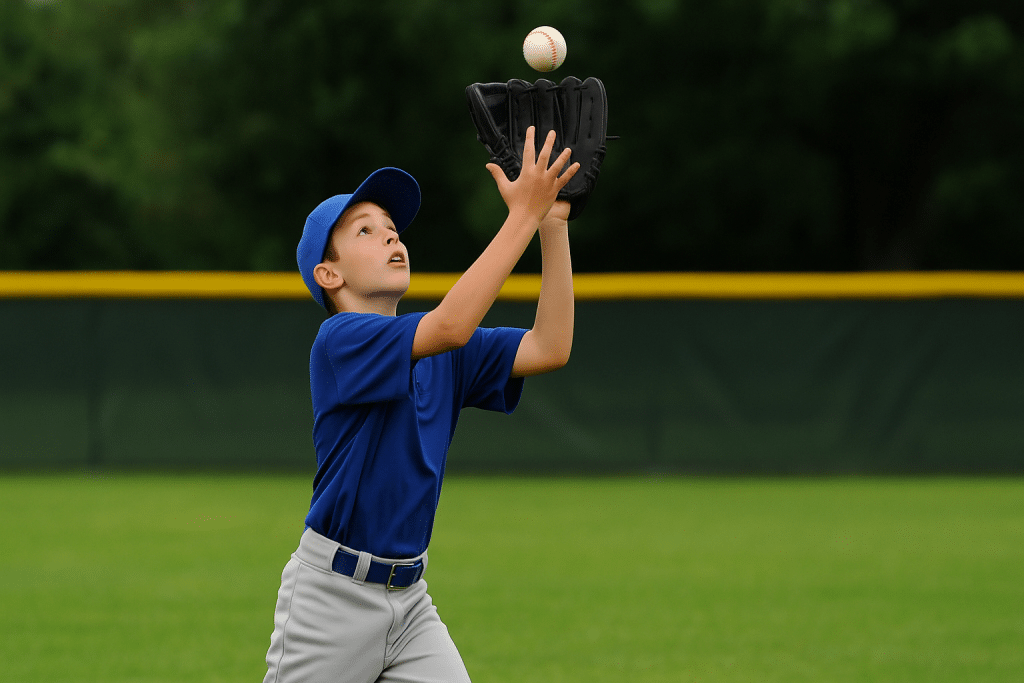
🛠️ 5 Tips To Coaching Defense
1. Start Every Play with a “Baseball Ready” Routine
If they’re standing flat-footed, they’re already behind.
Coach Tip: Use a cue before every pitch. Try:
“Pitcher’s set… ready position!”
Player version:
“Bounce like you’re guarding someone in basketball.”
Get their feet moving before the ball moves.
You’ll see the difference.

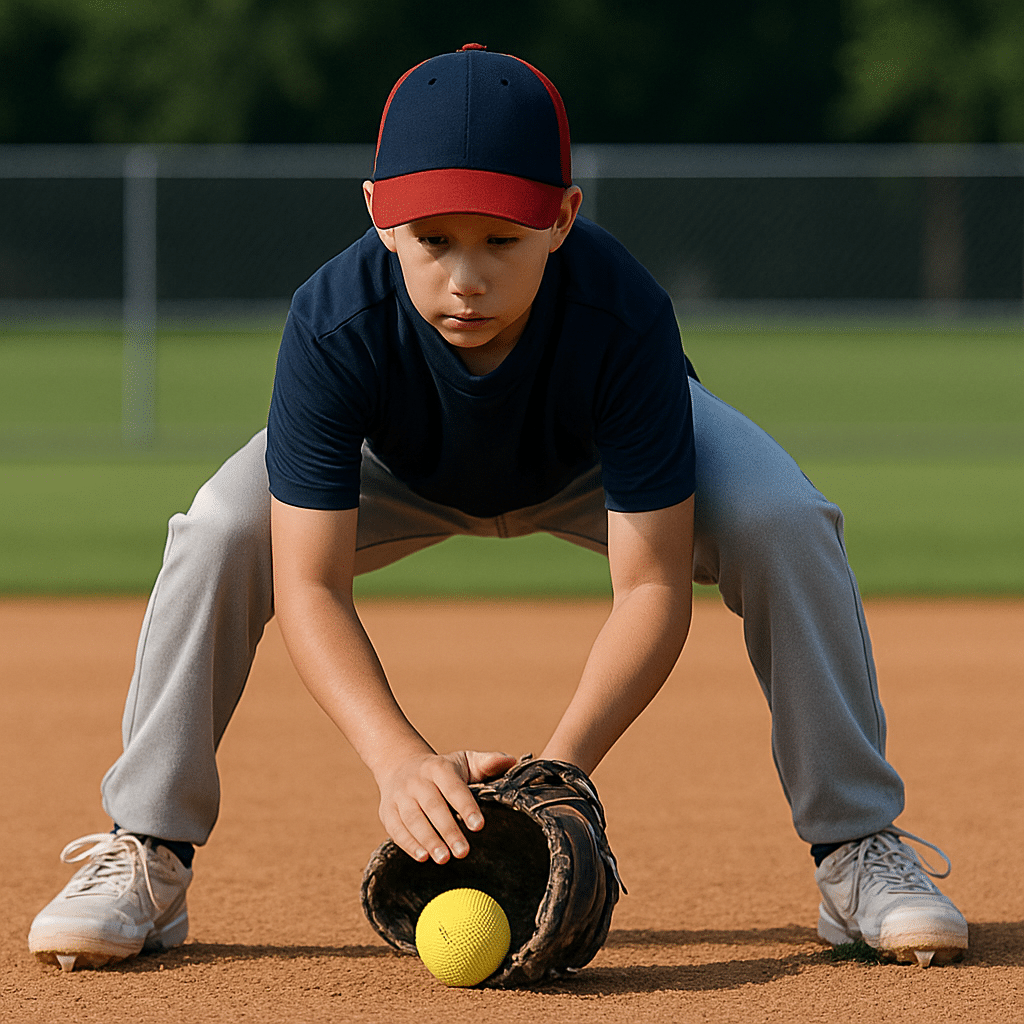
2. Teach the Triangle for Ground Balls
Feet wide. Glove out front. Body behind the ball.
Form a triangle—feet, glove, hand.
Coach Tip: Lay down three cones to form a triangle. Have players step into it before every rep.
Magic phrase:
“Butt down, glove out, eyes in.”
3. Pre-Pitch Situational Reminders
Most youth errors don’t happen when the ball is hit—they happen after the ball is fielded… when kids freeze.
Coach Tip: Ask out loud before each play:
“If it comes to you, where do you go with it?”
Fun twist: Make it a quick quiz. “Hey Eli, where’s the play if it’s hit to you?”
Build awareness before the ball’s even in play.
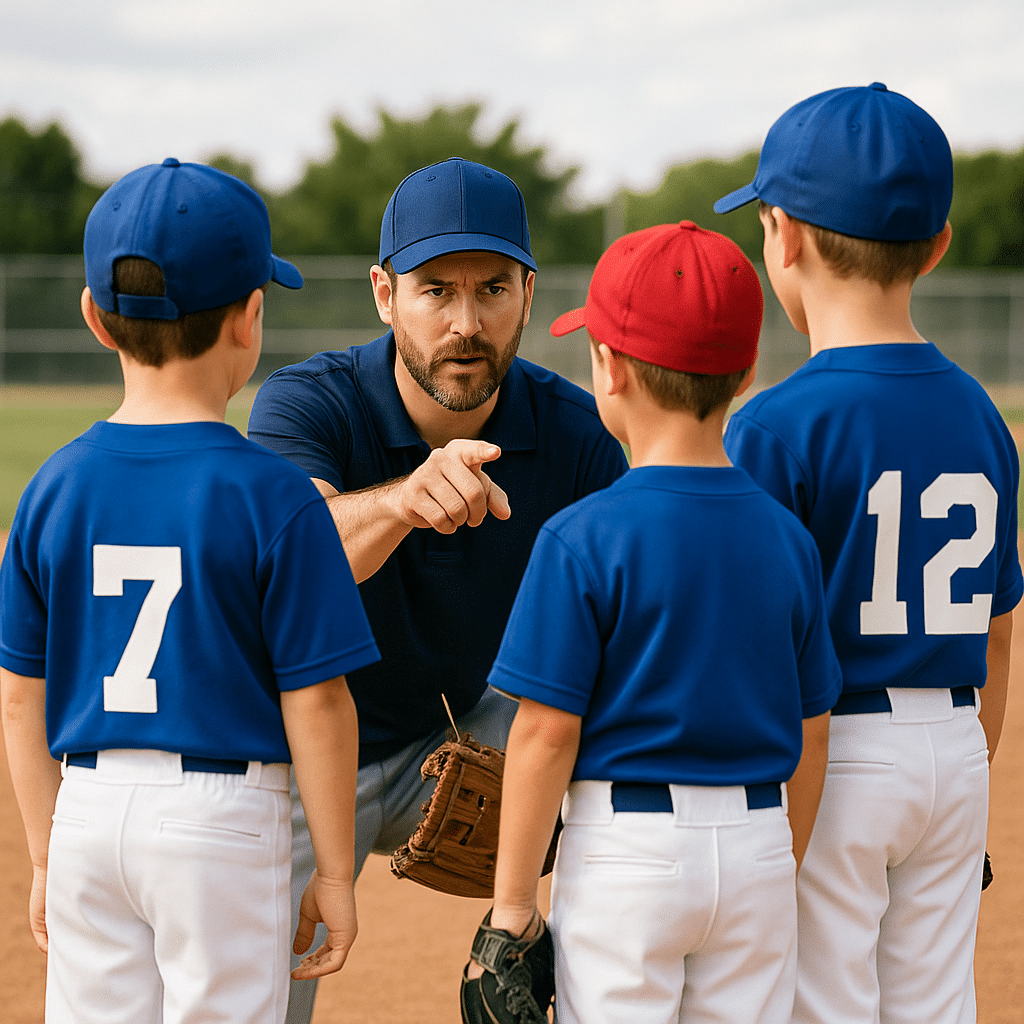
4. Shorten the Throwing Distance in Practice
Here’s a secret: full-length throws in every drill?
Totally unnecessary for most kids.
Coach Tip: Run mini infield drills at 30–40% of normal distance.
This lets them focus on footwork and form—not chucking it as hard as they can.
Bonus trick: Use flat gloves and tennis balls to teach soft hands and control.

5. Praise the Effort—Loudly
Not every play ends in an out. And that’s OK.
But every good effort deserves love.
They stay low after a bobble?
They back up a teammate?
They make the right decision even if the throw’s off?
That’s growth.
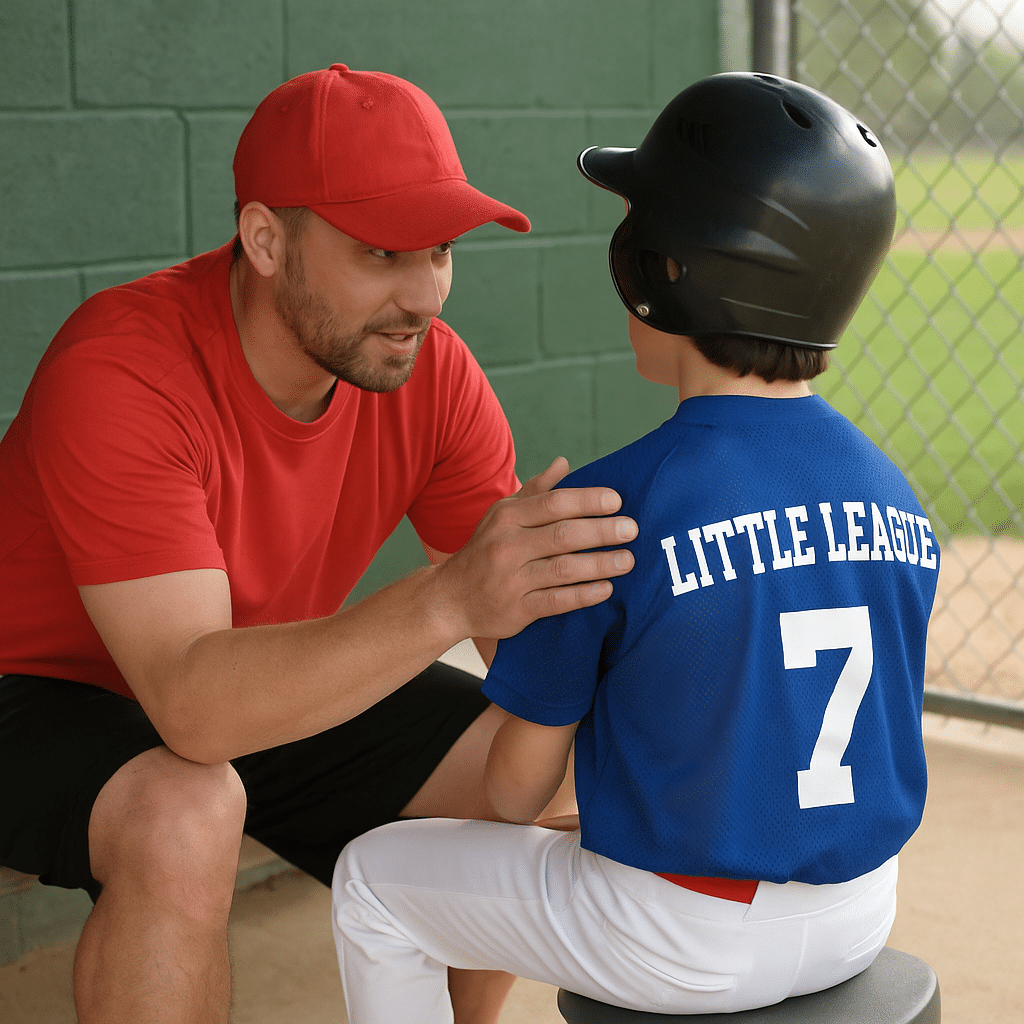
Coach Tip: Praise loud, praise specific.
“Loved how you got your glove down!”
“Way to recover and make the throw!”
Parent Tip: On the ride home, call out the little wins.
They hear it more than you think.
🧢 Gear That Helps You Teach Defense
Want tools that actually help without turning your trunk into a sporting goods store?
- Foam training balls – Less sting = more reps
- Pancake trainers – Teach proper glove work
- Throwing nets / targets – Easy at-home accuracy practice
❓FAQs — Coaching Youth Baseball Defense
1. What’s the best age to start teaching proper fielding technique?
Start simple at age 6–7. Emphasize ready position and glove control. The earlier the habits form, the better.
2. My kid’s afraid of the ball—what should I do?
Use foam or soft baseballs for reps. Fear disappears with confidence. Keep it low-pressure.
3. How can I improve my player’s reaction time?
Start with short hop drills, side shuffles, and small ball tosses. Even 5 minutes a day helps.
4. Should I assign fixed positions at a young age?
Not yet. Let them rotate until around age 10–11 to develop a full defensive skill set.
5. What if a player gets discouraged after every mistake?
Normalize errors. Even MLB players boot grounders. Praise the recovery, not just the play.
6. What’s one thing every youth coach should say more during defense?
“Great hustle!” Effort creates confidence—and confidence leads to cleaner plays.

💬 Final Word: Confidence First. Mechanics Second.
You’re not just coaching glove work—you’re coaching belief.
Build good habits.
Reinforce the little wins.
And most of all—make sure they know it’s okay to mess up.
Because progress doesn’t look perfect.
It looks like effort, repetition, and a lot of cheering from the dugout.
👉 Want more coaching tips, practice plans, and gear guides that actually work in the real world?
Follow us on Box-seats.com and Subscribe to High N Tight .
