
Weirdest Training Tools That Work
Forget the days when a bucket of balls and a tee were all you needed.
Baseball training has gone full mad scientist — and some of the weirdest-looking gadgets are the ones giving players the biggest edge.
Sure, you might get a few raised eyebrows when you pull them out at practice.
But if they make you quicker, sharper, and just a little more dangerous at the plate or in the field… who’s laughing now? Let’s dive into the oddball tools that actually earn their keep.
Disclosure: This page contains affiliate links. If you make a purchase through one of these links, I may earn a commission—at no extra cost to you. As an Amazon Associate, I earn from qualifying purchases.
1. Reaction Ball
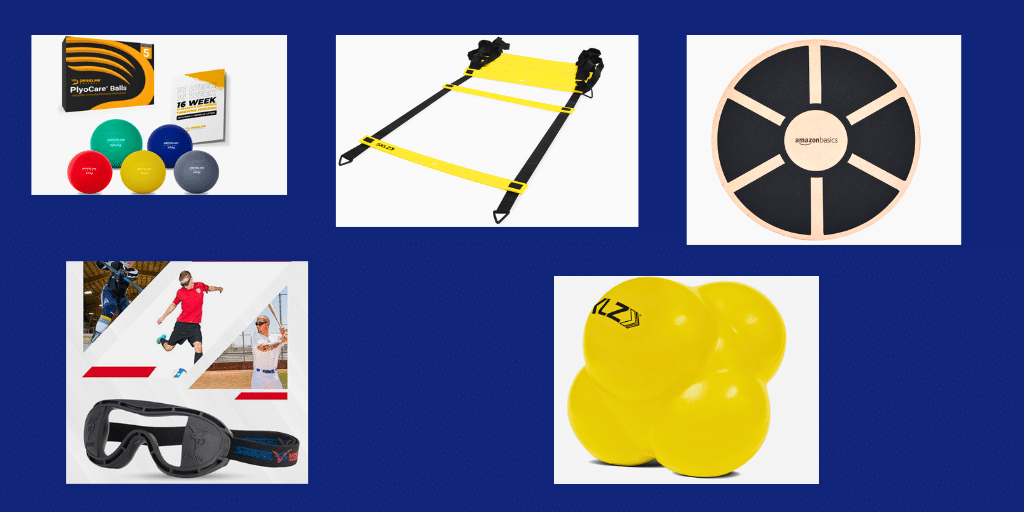
Featured Pick: SKLZ Reaction Ball
Featured Pick: SKLZ Reaction Ball
Who it’s for: Infielders, catchers, and anyone chasing quicker reflexes.
What it solves: Slow glove speed and hesitation on tricky hops.
What It Is & How It’s Used
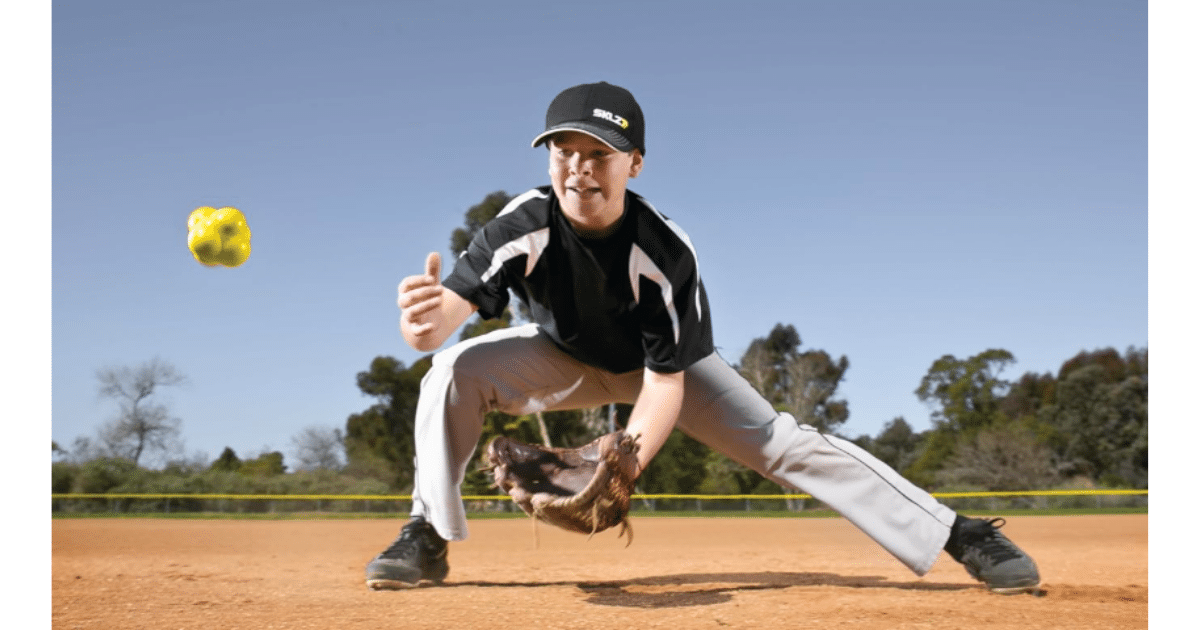
The SKLZ Reaction Ball is a six-sided, high-bounce rubber ball that ricochets unpredictably, forcing players to stay low, react instantly, and track erratic hops.
It’s a go-to for baseball and softball fielding drills, wall rebounds, and even multi-sport agility work. Works for all ages, solo or with a partner, and shines on flat, hard surfaces.
Parents & Coaches Say
Fast, varied reps keep kids engaged while sharpening first-step quickness and glove positioning.
Many report it holds up through heavy use on concrete or gym floors. Coaches stress the importance of staying low and keeping hands out front to handle chaotic hops — praising the “game-like” pressure it creates.
Players Say
They love the “fun factor.” The unpredictable bounce forces constant focus and makes practice fly by.
Quick, high-tempo sets against a wall or partner are favorites, and its durability makes it a warmup and reaction-circuit staple. The only gripe? It needs a good surface — grass or uneven dirt kills the bounce.
Best Practices & Limitations
Use on smooth, hard surfaces for best results. Pair with drills that reinforce good posture and getting the glove out front early — meaning it’s ready before the hop arrives.
Partner rolls, wall short hops, and timed reaction series work great. For non-baseball sports, tweak the drills to fit.
Pros:
- Durable, long-lasting build
- Improves hand-eye coordination and quickness
- Keeps training fun and engaging
Cons:
- Works best on flat, hard surfaces
- Needs adaptation for non-diamond sports
Bottom Line:
A low-cost, durable tool that turns reaction drills into a game — making players quicker without them even realizing they’re working.
2. Vision Training Glasses
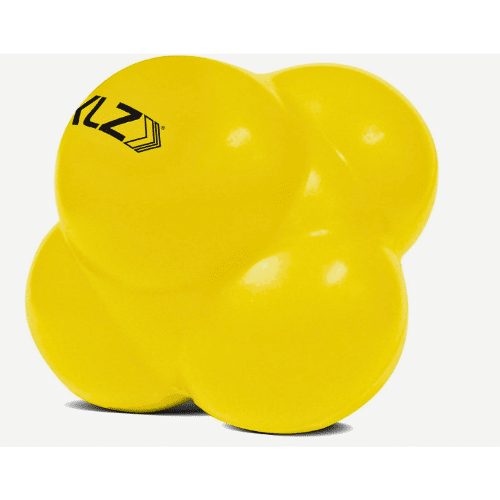
Featured Pick: Professional Vision Training Goggles with Adjustable Strap
Who it’s for: Athletes who need sharper focus, earlier eye engagement, and cleaner ball tracking.
What it solves: Peeking before securing the ball, lazy peripheral tracking, or late visual lock-in.
What They Are & How They’re Used
Two main types:
- Strobe/flicker lenses that intermittently block vision, forcing predictive tracking.
- Occlusion goggles that narrow the field of view to cue better head–eye discipline.
Coaches use them in short bursts during warmups, reaction circuits, and ball-tracking drills to reduce visual “noise” and demand earlier eye contact. The goal is sharper habits, not permanent eyesight changes.
Parents & Coaches Say
They clean up bad habits fast, especially glancing upfield too soon. Budget occlusion goggles get high marks for being affordable, durable, and adjustable. Everyone agrees — they’re a tool, not a magic fix.
Players Say
The ball feels like it “slows down” during drills, making catches more deliberate and reducing last-second flinches. Gains come from better mechanics and focus, not vision health.
Best Practices & Limitations
Use in realistic movement patterns with short bursts, alternating with normal-vision reps. They don’t improve eyesight and can hurt situational awareness if overused.
Pros:
- Sharpens focus and head–eye discipline
- Affordable, easy to add to drills
- Works across multiple sports
Cons:
- Gains fade without regular reinforcement
- No effect on actual vision health
Bottom Line:
A quirky but effective way to force sharper visual habits — great for adding concentration pressure to everyday drills.
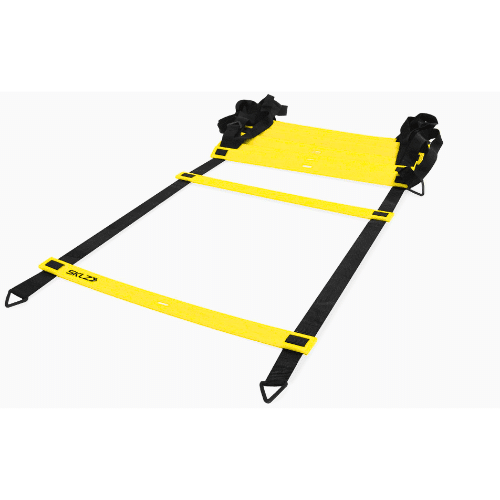
3. Rope Ladders — Footwork Meets Cardio
Featured Pick: SKLZ Speed and Agility Ladder
Who it’s for: Youth and developing players who need better coordination, timing, and body control.
What it solves: Sloppy footwork and lack of rhythm before practice.
How They’re Used
Coaches pair ladder drills with med ball throws, short accelerations, or shuffle-to-throw sequences so the rhythm ties directly into game-relevant movements.
Parents and coaches like them because they’re low-cost, portable, and easy to set up as a self-run station — keeping players active and cutting down on idle time.
What People Like
They build coordination and posture control, boost confidence as players “master” new patterns, and gamify warmups to keep energy high.
Ladders also reinforce athletic positions — hips back, chest up, quiet head — while developing quick feet under light fatigue.
Common Criticisms & Limits
They won’t make players faster on their own — quick feet in squares don’t automatically translate to base stealing or explosive first steps.
Overcomplicated patterns can limit carryover to baseball movements, and unsupervised drills risk reinforcing bad form (staring down, hunched posture, heel striking).
Who Benefits Most
Youth athletes gain the most in coordination, timing, and focus during warmups. Advanced players use ladders as a short “neural wake-up” before heavier speed work or as light recovery-day coordination drills.
Pros:
- Affordable, portable, and quick to set up
- Fun and engaging for players
- Improves rhythm and coordination quickly
Cons:
- Doesn’t build raw speed alone
- Needs good technique to avoid bad habits
Bottom Line:
A simple, portable tool that sharpens coordination and focus when used with purpose — ideal as a warmup or skill-tune session before practice..
4. Balance Boards – Ankle Support
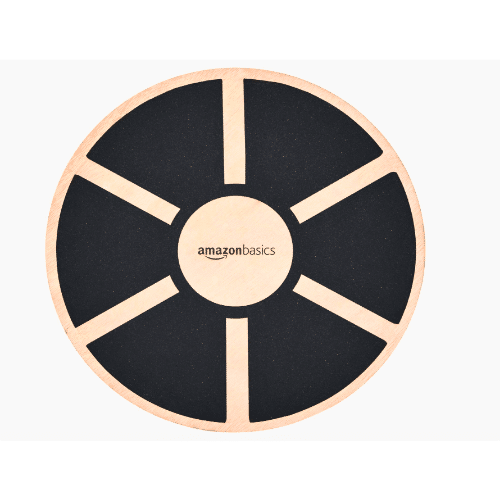
Featured Pick: Amazon Basics Wood Wobble Balance Trainer Board
Who it’s for: Older youth, teen, and adult players looking to improve ankle stability, core control, and overall balance — especially those in rehab or adding stability work. Younger players can use it with supervision and a stable support (wall or rail) until they build confidence.
What it solves: Weak ankles, poor trunk control, and low proprioceptive awareness.
How It’s Used
In baseball, balance boards show up in warmups, arm-care circuits, and rehab sessions to challenge single-leg stability, ankle strength, and trunk control.
Players use them while catching tosses, doing light med-ball work, or performing controlled squats and hinges.
The appeal: low cost, easy home setup, and the ability to add instability to simple moves — boosting foot pressure awareness and posture for both hitters and fielders.
Best practice starts near a wall or support, moving from double-leg to single-leg holds, then adding light upper-body tasks to simulate baseball demands without losing form.
What People Like
- Noticeable ankle and balance gains after short, consistent sessions
- Reduction in recurring ankle or foot tweaks
- Engages smaller stabilizers and core muscles often missed in traditional strength work
- The “gamified” feel keeps youth athletes engaged, especially for at-home training
Common Criticisms & Limits
Getting “good” on the board doesn’t automatically improve base running, first-step speed, or bat velocity.
Too much instability can harm mechanics if athletes chase tricks over good posture. Some boards carry a fall risk for unsupervised athletes.
Best Practices for Baseball
Keep sessions short (5–10 minutes after tissue prep, before main work).
For younger or less experienced athletes, start with both feet on the board near a wall or sturdy surface. Progress to single-leg holds and light tosses only once posture control is solid.
Tie balance work directly to baseball skills — for example:
- Two-leg stance + glove work with short partner tosses
- Single-leg stance + underhand catches to challenge stability
- Light med ball passes to simulate throwing mechanics
Pair these with baseball-specific drills (shuffle-to-throw, accelerations, hitting/receiving) immediately afterward to connect stability gains to game movements.
Who Benefits Most
Youth athletes, players rehabbing lower-body injuries, and anyone aiming to clean up posture and control in hitting or fielding mechanics.
Pros:
- Affordable and compact
- Targets stabilizers and core effectively
- Adaptable for all ages and skill levels
Cons:
- No direct skill transfer without integration into baseball movements
- Requires supervision for younger players
Bottom Line:
A low-cost, space-saving tool that builds stability and balance when paired with baseball-relevant drills — like playing catch or light med ball work on the board.
Best for older youth and above, or younger players with close supervision.
Great for ankle health, core control, and posture awareness when used as part of a broader baseball program.
Best Practices for Baseball
Keep sessions short (5–10 minutes after tissue prep, before main work).
Progress from two-leg holds to single-leg work, then add ball tosses or light med-ball moves while keeping eyes level and hips stable.
Pair with baseball-specific drills (shuffle-to-throw, accelerations, hitting/receiving) immediately afterward to connect stability gains to on-field performance.
Who Benefits Most
Youth athletes, players rehabbing lower-body injuries, and anyone aiming to clean up posture and control in hitting or fielding mechanics.
Pros:
- Affordable and compact
- Targets stabilizers and core effectively
- Adaptable for all ages and skill levels
Cons:
- No direct skill transfer without integration into baseball movements
- Requires supervision for younger players
Bottom Line:
A low-cost, space-saving tool that builds stability and balance when used as part of a broader baseball program — great for ankle health, core control, and posture awareness..
5. Weighted Balls (Overload/Underload) — The Velocity Hack
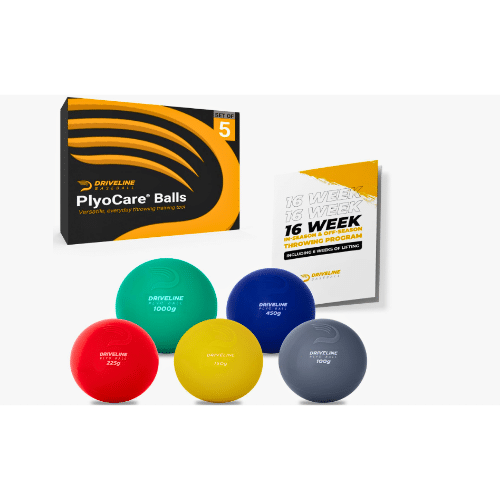
Featured Pick: Driveline PlyoCare Balls
Who it’s for: Pitchers and coaches committed to building velocity and arm health through structured overload/underload training.
What it solves: Lack of progressive resistance in throwing programs, helping improve arm strength, mechanics, and confidence.
What They Are & How They’re Used
Driveline’s PlyoCare Balls are widely considered the gold standard in the weighted ball world, trusted by pitchers, coaches, and parents alike.
Their tacky, textured surface offers a secure grip and balanced feel — no slipping, no awkward weight shifts. Built for progressive overload and velocity programs, they’re also a staple in many arm-care routines.
Key Features
- Durable construction for long-term use
- Slightly textured surface for secure grip and control
- Balanced weight distribution for consistent mechanics
- Designed for progressive overload and velocity training
What Parents, Coaches & Players Say
Parents and coaches praise them for adding resistance safely without compromising throw quality.
The consistent feel lets players focus on form instead of fighting the ball. Players like how closely they mimic a regulation baseball, making training more natural and confidence-building.
Bloggers often list them as the “go-to” choice for durability and grip.
What They’re Saying: Built to last and trusted by coaches, these weighted balls add resistance without wrecking mechanics. Players love the secure grip and game-like feel — but the magic only happens with smart programming and good form.
Best Practices & Limitations
Not plug-and-play — proper programming, mechanics, and recovery are critical to avoid injury. Gains are maximized in structured, coach-guided routines with clear progression.
Pros:
- Exceptional build quality — lasts season after season
- Comfortable, confidence-building grip and balance
- Integrates seamlessly into structured arm-care and velocity programs
Cons:
- Higher price than many competitors
- Requires proper coaching and progression to be safe and effective
Bottom Line:
If you’re serious about velocity training and willing to invest in quality, PlyoCare Balls deliver.
They’re not a magic fix — results depend on smart programming and solid mechanics — but in the right hands, they can be a game-changer.
FAQs
Q: Are these tools safe for kids?
A: Yes — but weighted ball programs and balance drills should always be supervised to ensure proper form and avoid injury.
Q: How often should I train with these tools?
A: For most players, 2–3 sessions per week is plenty. Consistency matters more than overdoing it.
Q: Can I use these at home?
A: Absolutely. Most are portable, easy to store, and work well in small spaces.
Q: Which tool gives the fastest results?
A: Vision training glasses often produce noticeable hitting or catching improvements within a few weeks.
Q: Do MLB players actually use these?
A: Yes — all five have been spotted in pro training facilities and workout programs.
Q: Which is the most budget-friendly?
A: The reaction ball — often under $10 and built to last.
Conclusion
If you can handle looking a little ridiculous, you might just unlock your next competitive edge.
From chasing a reaction ball that seems to have a mind of its own to balancing like a surfer mid-drill, these quirky tools work because they force your body — and brain — to level up.
So embrace the strange, train with intent, and let the results do the talking. By the time they see the difference on the field, you’ll be the one smirking.
.


