7 Baseball Drills That Require Zero Gear (Perfect for Empty Backyards)
Who says you need a batting cage, pricey pitching machine, or full set of gear to get better at baseball? Some of the best ways to sharpen accuracy, quickness, and confidence take nothing more than a ball, a wall, and a patch of grass.
In this post, we’ll break down seven fun, no-equipment drills you can do right in your backyard — solo, with a sibling, or with a parent.
Whether you’re building arm strength, improving fielding mechanics, or just burning off some after-school energy, these simple drills keep training affordable and keep kids engaged.
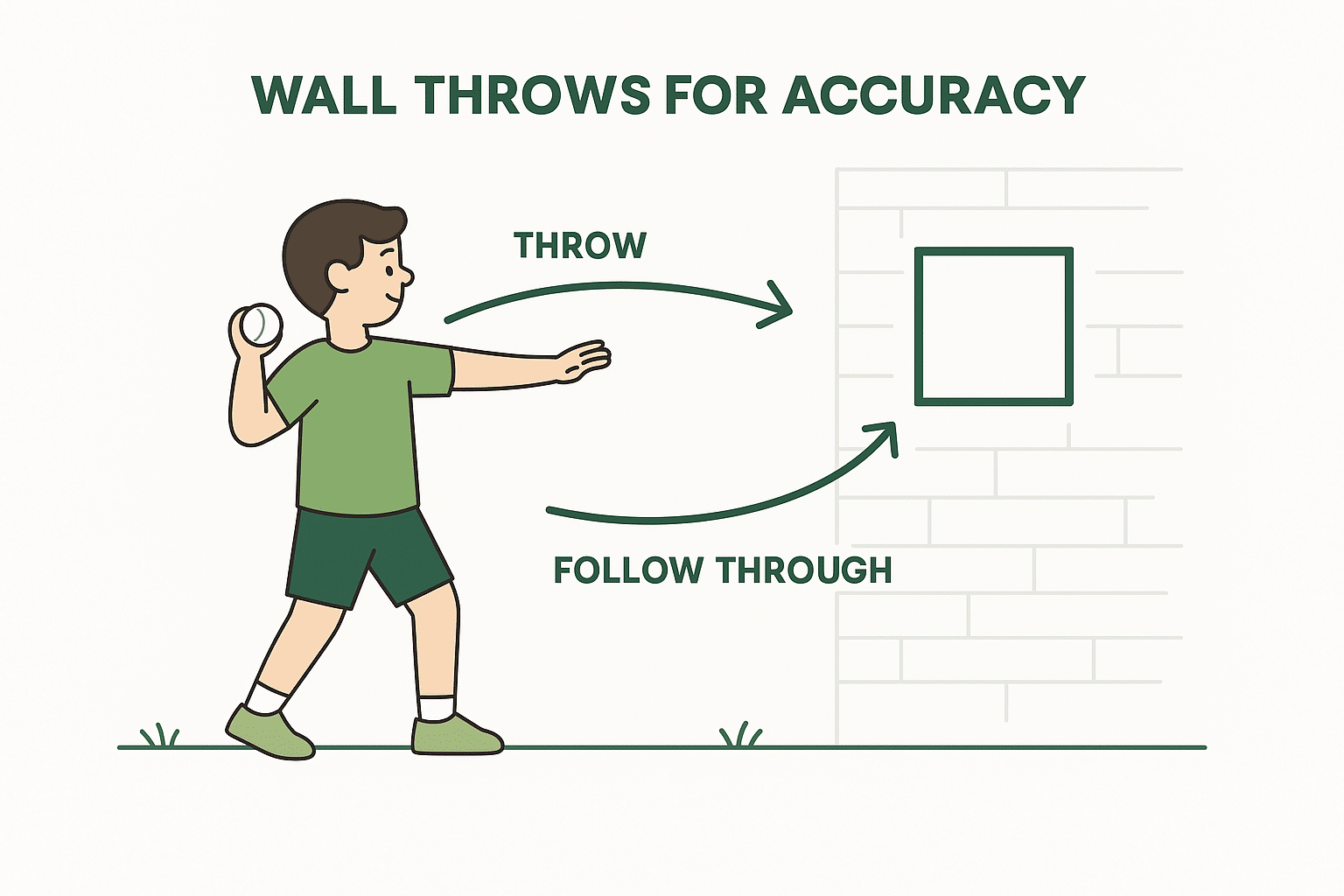
1. Wall Throws for Accuracy
Quick Take: Turn any sturdy wall into your personal throwing coach.
Who It’s For: Players looking to improve throwing mechanics, accuracy, and arm strength without a partner.
How It Works:
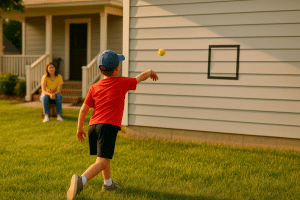
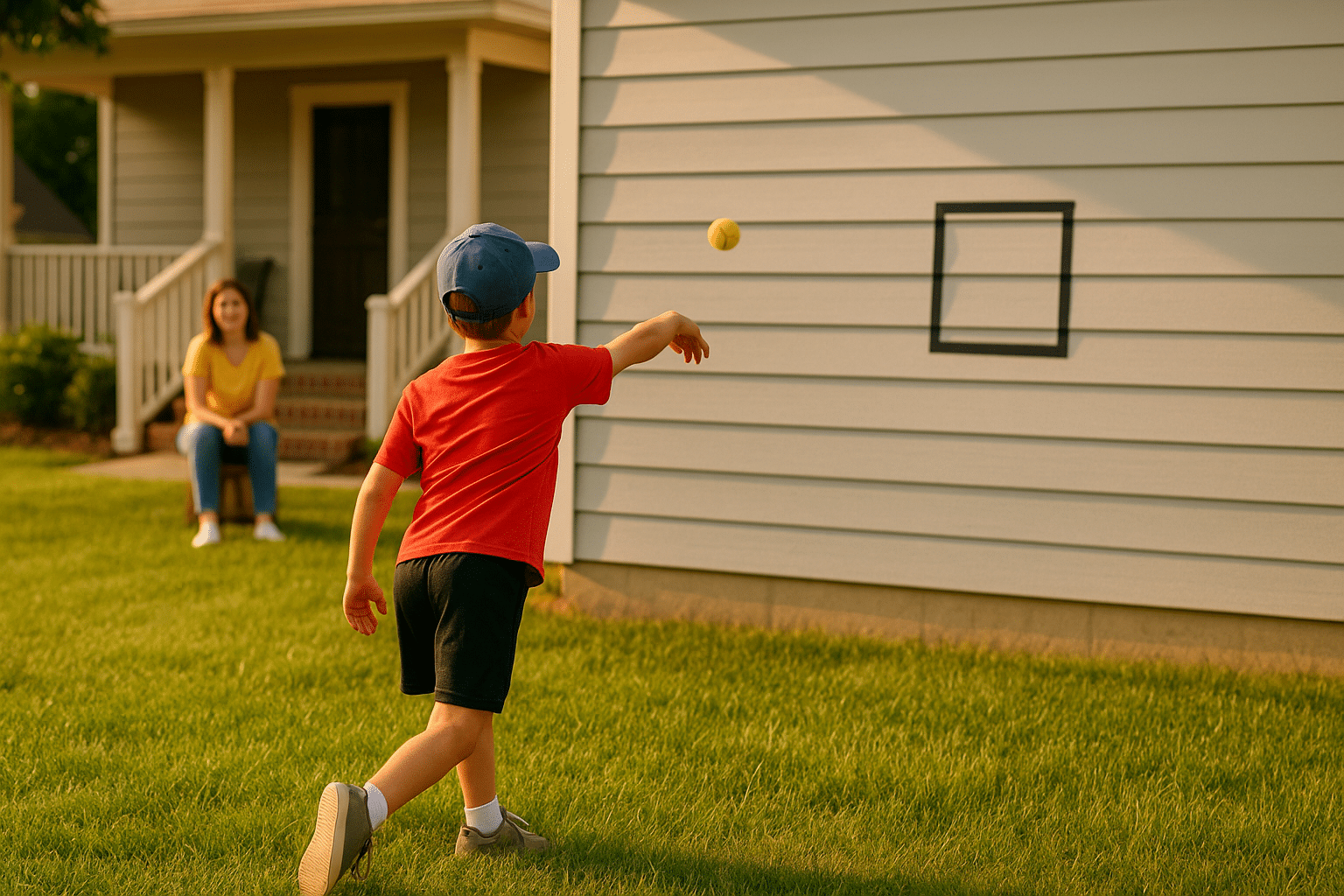
- Mark a square target on the wall with chalk or painter’s tape at shoulder height.
- Stand a few feet away and throw, focusing on smooth mechanics and follow-through.
- Step back as you improve, gradually adding velocity and aiming for consistent bullseyes.
Coaching Tip: Turn it into a game — track how many times you hit the target out of 10 throws, and try to beat your score each round.ng, healthy arm without a throwing partner.
2. Partner Catch with Goals
Quick Take: Turn a simple game of catch into a competitive mini-game.
Who It’s For: Kids with a sibling, friend, or parent to practice with.
How It Works:
- Play normal catch but add challenges — like counting consecutive catches without a drop, or throwing with your glove-side hand only.
- Step back a few feet after each successful round to increase distance and stamina.
- Add variations like “quick release throws” to work on game-speed timing.
Coaching Tip: Keep score and play to 10 — first one to drop a ball owes the winner a silly victory dance. This keeps kids locked in and laughing while improving focus under pressure.rd sessions before dinner.

3. Ground Ball Glove Drill
Quick Take: Sharpen reaction time and fielding mechanics with nothing but a ball and a wall.
Who It’s For: Infielders and beginners learning to stay low, move laterally, and field cleanly.
How It Works:
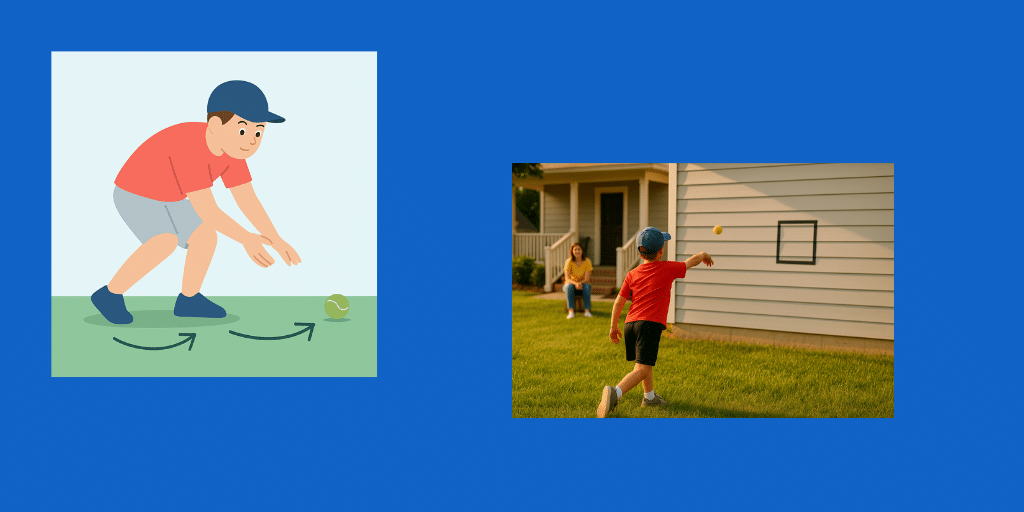
- Roll or gently toss a ball side to side, shuffling your feet to get in front of it.
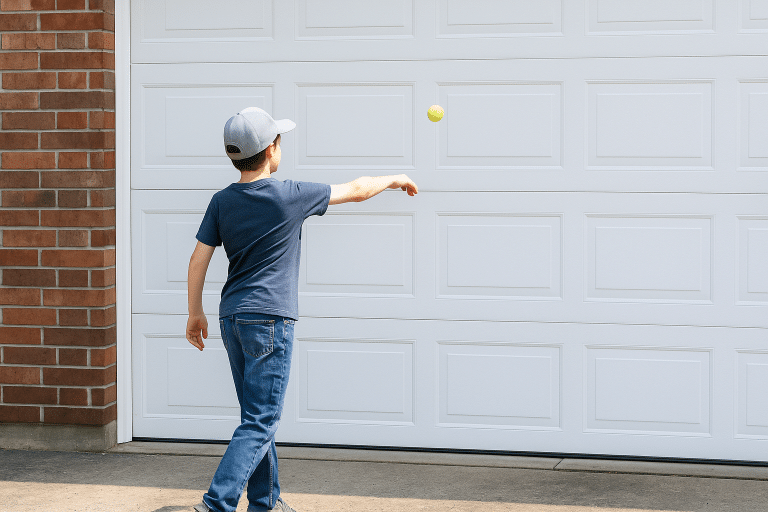
- For solo practice, throw a tennis ball against a wall to create unpredictable hops.
- Focus on staying low, using soft hands, and transferring quickly to your throwing hand.
Coaching Tip: Count how many clean “scoops” you can make in a row. Add a time limit for extra challenge — see how many you can field cleanly in 60 seconds.hout a glove.
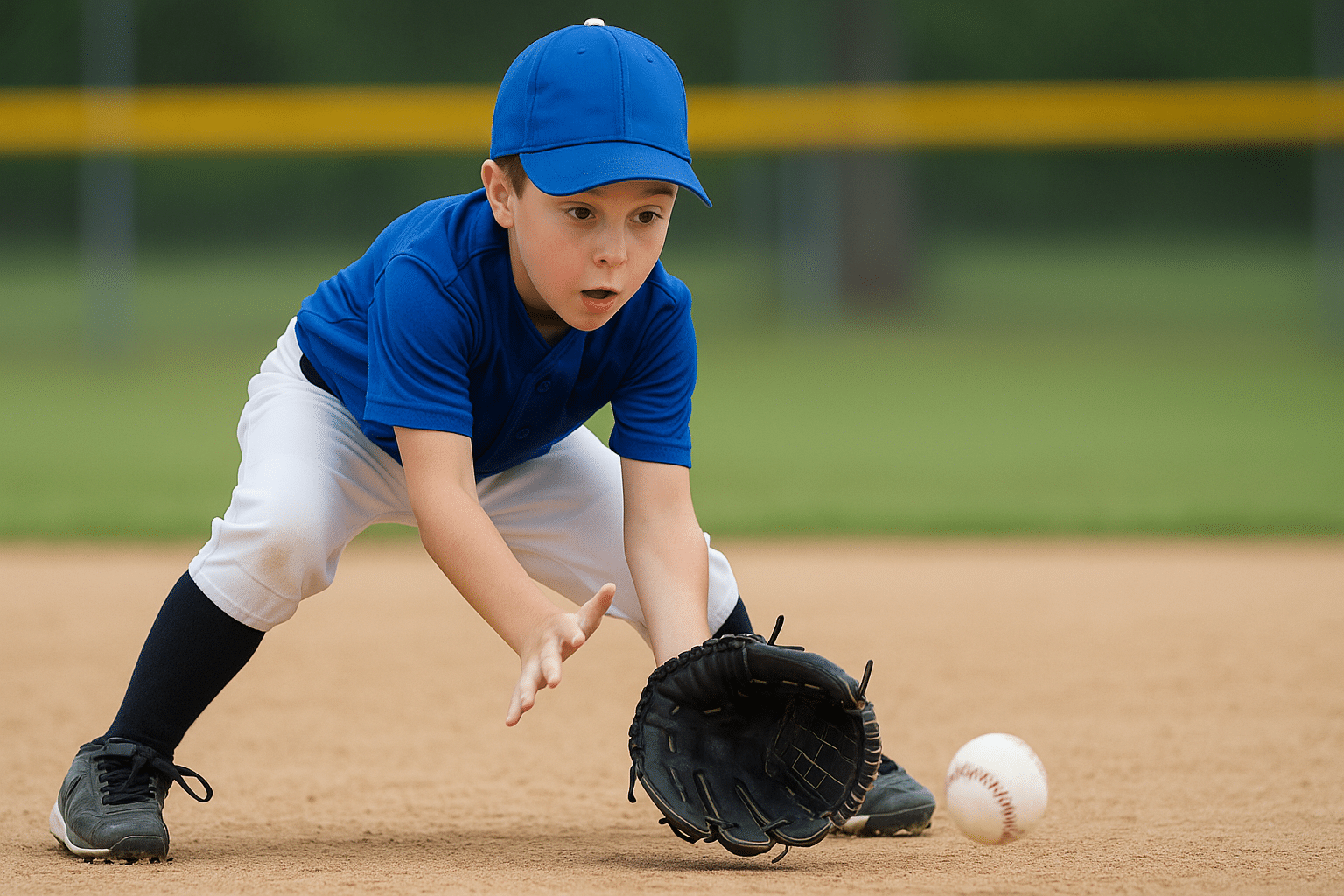
4. Barehanded Fielding
Quick Take: Build soft hands and quick transfers without even using a glove.
Who It’s For: Any player who wants elite hand control, better touch, and smoother transfers.
How It Works:
- Use a soft ball or wiffle ball and roll grounders toward yourself.
- Field the ball barehanded, staying low and using soft hands.
- Practice clean, quick transfers to your throwing hand.
Coaching Tip: Try to field and “fake throw” in one smooth motion — the goal is zero wasted movement. Bonus challenge: see how many clean transfers you can do in 30 seconds.If you want better hands in the field, this drill is a must-try — no glove needed.
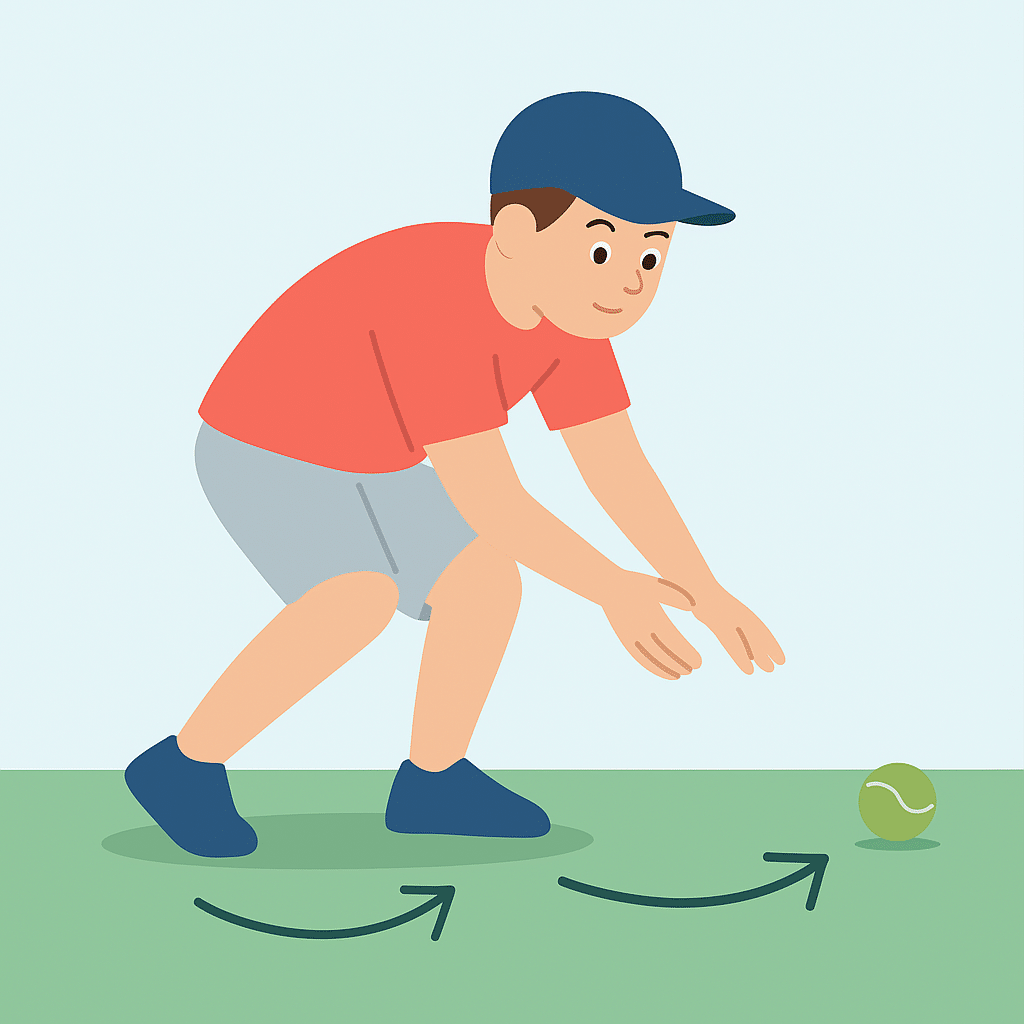
5. Pop Fly Drill
Quick Take: Build confidence tracking and catching fly balls.
Who It’s For: Outfielders or any player learning to get comfortable under a ball.
How It Works:
- Toss a ball high in the air and work on getting under it with proper footwork.
- Catch with two hands — just like in a game.
- Call out “I got it!” to practice communication and reduce collisions.
Coaching Tip: Add a twist by throwing balls slightly left or right so players must adjust on the run. For younger kids, use a wiffle ball to make it less intimidating.
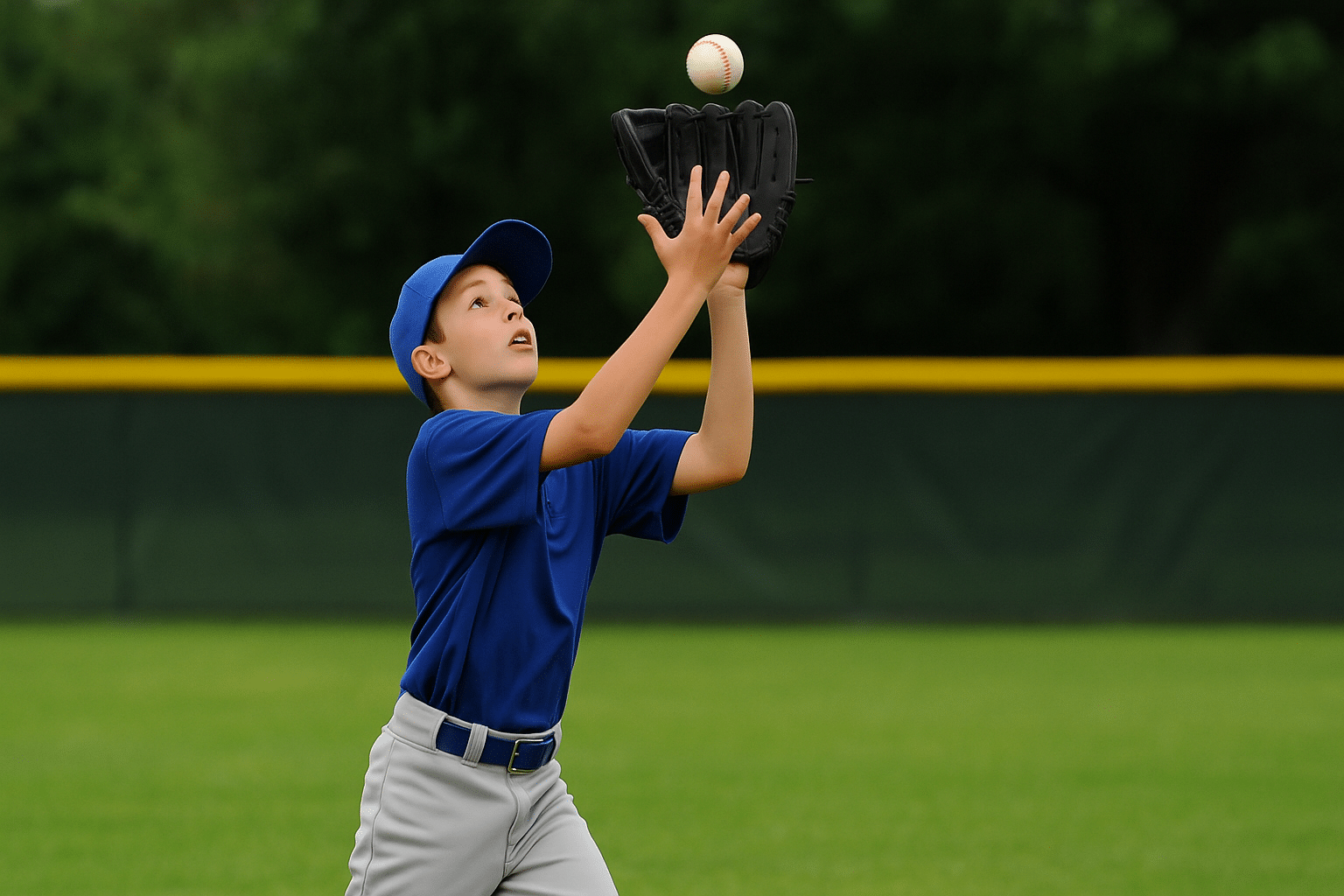
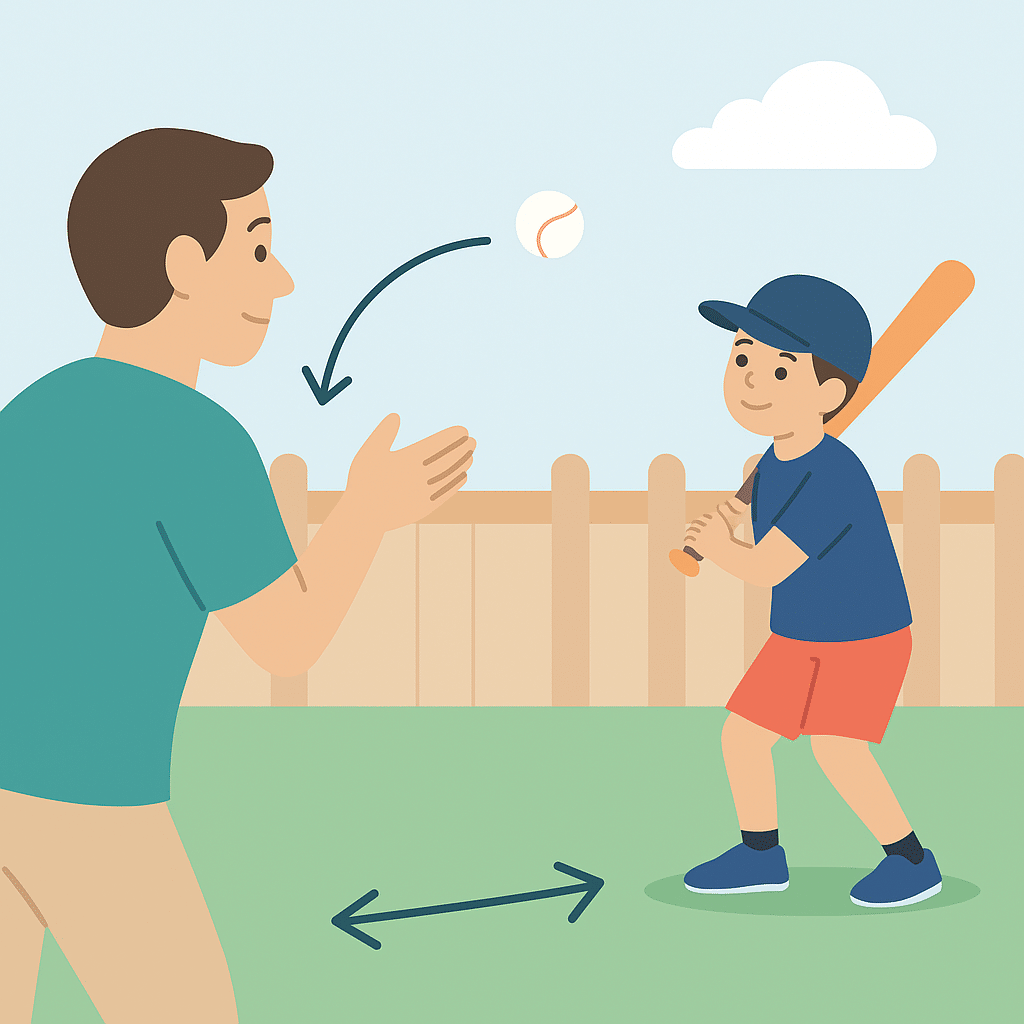
6. Soft Toss Challenge
Quick Take: Build timing and barrel control with simple, repeatable tosses.
Who It’s For: Hitters who want extra reps without a pitching machine.
How It Works:
- Have a partner softly toss balls to you from the side.
- Focus on smooth, consistent swings and clean contact.
- If solo, toss the ball to yourself or use a tee for stationary work.
Coaching Tip: Track how many balls you square up out of 10 — aim for 8+ line drives before moving back or increasing speed. Foam balls make this drill safe indoors or in small spaces.
Line: A backyard hitting staple that improves bat-to-ball skills in a safe, controlled environment.
7. Barehanded Throwing Practice
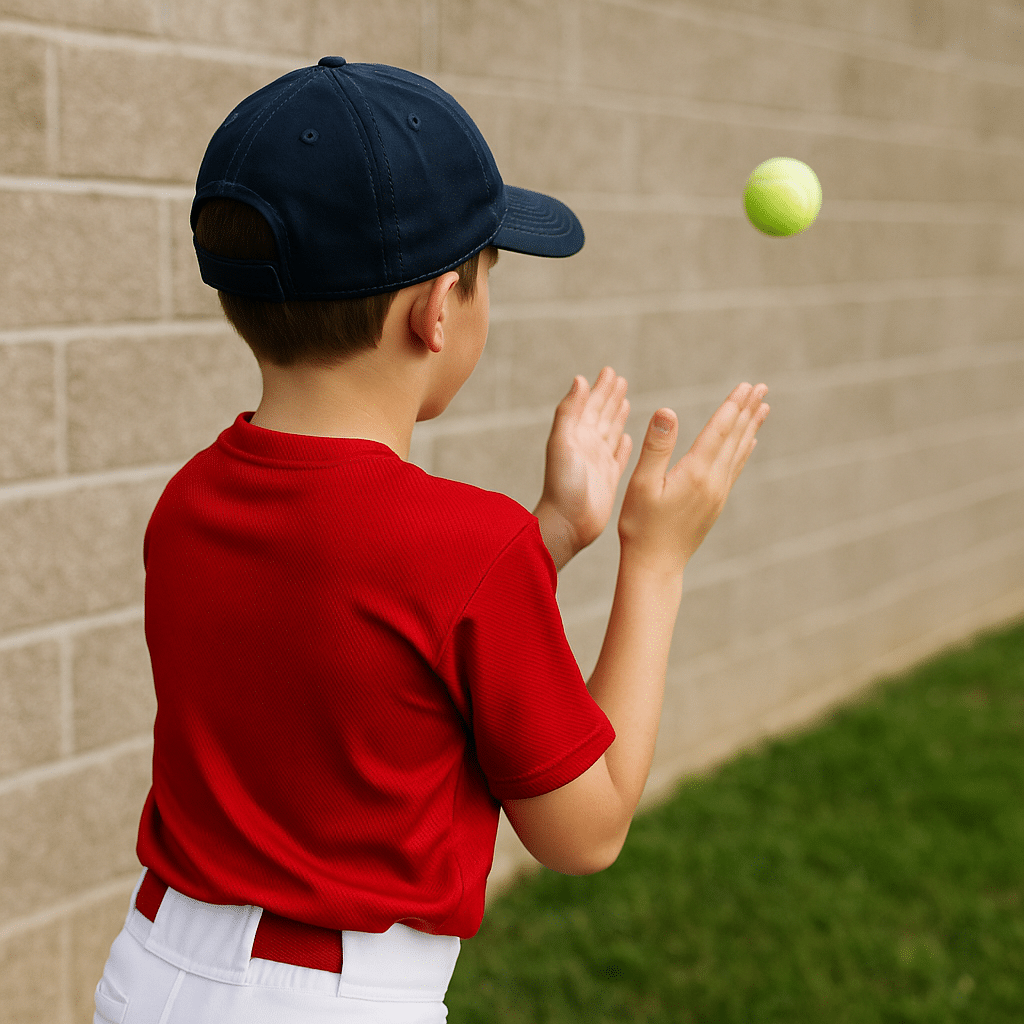
Quick Take: Strengthen your hands and sharpen reflexes — no glove required.
Who It’s For: Any player looking to improve grip strength, hand control, and reaction time.
How It Works:
- Play catch barehanded with a soft ball or bounce it off a wall.
- Focus on “soft hands,” cushioning the catch, and making a smooth transfer.
- Start at a short distance and gradually move back as comfort improves.
Coaching Tip: Time yourself — see how many clean catches and transfers you can complete in 60 seconds. This builds both confidence and endurance. simple, underrated drill that builds toughness and quick hands.
FAQs
Can my child do these drills safely indoors?
Yes — just use soft or foam balls and make sure there’s enough space to avoid breaking lamps or windows.
How many reps should we aim for per drill?
Start with 10–15 throws or catches per round, then add more as consistency improves.
What age group are these drills best for?
These work for all ages, but they’re especially helpful for players ages 6–14 building strong fundamentals.
Should we warm up first?
Absolutely. Light jogging, arm circles, and dynamic stretches reduce injury risk and get muscles ready.
How do we keep backyard practice fun?
Turn drills into games — keep score, race against the clock, or add small challenges to keep kids engaged.
Do we need a coach to supervise?
Not necessarily, but younger players benefit from a parent or sibling watching to make sure their form is correct.
Conclusion
These seven drills prove you don’t need fancy equipment or pricey gear to get better at baseball.
By working on throwing mechanics, soft hands, footwork, and communication, players can build a rock-solid foundation right in the backyard — no excuses.
When you’re ready to level up, adding simple tools like a reaction ball or pop-up net can make training even more fun and challenging..
After you master these zero-gear drills, grab a reaction ball or training net to add unpredictability and variety to your backyard sessions.